
If you are still uninsured in New York after losing Essential Plan coverage, you are not alone, and you are not out of options.
Approximately 450,000 New Yorkers were affected when the Essential Plan income range above 200% of the federal poverty level ended on July 1, 2026. Many of those individuals were self-employed, worked part time or seasonally, earned income through gig work, retired early, worked for a small business, or simply saw their income rise slightly above the new limit.
The transition Special Enrollment Period for affected Essential Plan members ran from May 16 through August 30, 2026, and it has now closed. For most people who do not have another qualifying life event, the next guaranteed opportunity to enroll in a Qualified Health Plan is 2027 Open Enrollment: November 1, 2026, through January 31, 2027.
That may sound like a long wait. It does not have to be a confusing one. Here is exactly what to do now.
“Losing health insurance can be stressful and confusing, and New Yorkers deserve clear, reliable information as they make decisions about their care.”- New York Attorney General Letitia James
First, Understand What Changed, and Who Was Affected
New York’s Essential Plan previously covered eligible adults with household income up to 250% of the federal poverty level. Beginning July 1, 2026, eligibility generally returned to 200% of the federal poverty level.
For 2026, 200% FPL is approximately:
- $31,920 annually for a one-person household
- $43,280 for a two-person household
- $54,640 for a three-person household
- $66,000 for a four-person household
The people most likely to be affected included:
- Self-employed and gig workers with fluctuating income
- Part-time, seasonal, and contract workers
- Early retirees who are not yet eligible for Medicare
- Small business employees without affordable employer coverage
- New Yorkers whose income increased just above 200% FPL
- Former Essential Plan members in the 200–250% FPL range
If your income is now at or below 200% FPL, the Essential Plan may still be available. It generally offers $0 monthly premiums, no deductible, and low cost-sharing, and enrollment is available year-round through NY State of Health.
That makes your first step especially important.
Step 1: Find Out Where You Stand Today
Before assuming you must wait until November, review your current household and income information.
Start by confirming:
- Your household size
- Your expected 2026 household income
- Your expected 2027 household income
- Whether anyone has access to employer-sponsored insurance
- Whether you may qualify for Medicaid or the Essential Plan
Marketplace eligibility generally uses your expected household income for the coverage year, not simply last year’s tax return.
“Marketplace savings are based on your expected household income for the year you want coverage, not last year’s income.”- HealthCare.gov
For self-employed or gig workers, estimate net income after eligible business expenses. For hourly workers, review your current pay rate, expected schedule, overtime, and number of pay periods remaining. Include relevant income such as wages, unemployment benefits, retirement income, taxable Social Security, interest, dividends, and rental income.
The NY State of Health Essential Plan page and nystateofhealth.ny.gov can help you begin the eligibility review.
If you are eligible for the Essential Plan, do not wait for Open Enrollment. It is available year-round, and coverage for a new enrollee generally begins on the first day of the month in which the plan is selected.
Need help making sense of the numbers? Super Senior Services can provide a personalized New York benefit review, including a plain-English explanation of your likely options.

Step 2: Check for a Special Enrollment Period
If you do not qualify for the Essential Plan, you may still be able to enroll in a Qualified Health Plan before November if you experienced a qualifying life event.
Common events include:
- Losing health coverage, including losing Essential Plan eligibility
- Losing job-based insurance
- Marriage
- Divorce or legal separation
- Birth, adoption, or foster placement
- Moving permanently to New York or to a new service area
- Aging off a parent’s plan at age 26
- Certain changes in immigration or lawful presence status
- A change that makes you newly eligible for financial assistance
A Special Enrollment Period is generally available for 60 days from the qualifying event, although timing can vary depending on the event and the information NY State of Health receives.
Gather documentation before you apply. Depending on the event, this may include:
- A termination or renewal notice showing loss of coverage
- Your former insurance identification card
- An employer letter confirming the end of coverage
- A marriage certificate or divorce decree
- A birth or adoption record
- A lease, utility bill, or other proof of a permanent move
- Proof of your previous address or coverage
- Documents showing your current household and income
Upload clear copies and keep the originals. If NY State of Health requests additional information, respond quickly. An incomplete verification can delay your enrollment or coverage effective date.
Review the official NY State of Health Special Enrollment Period information, or contact us for help determining whether your situation qualifies.
Step 3: Know What Can, and Cannot, Be Backdated
Coverage start dates are one of the most important parts of this process because a plan selected today may not pay for yesterday’s medical care.
Medicaid
Under current rules, Medicaid may cover eligible medical bills from up to three months before the application date, provided you qualified during those months.
Beginning January 1, 2027, the retroactive period changes:
- Adults ages 19–64 may receive up to one month of retroactive coverage
- Children, seniors, people with disabilities, and pregnant individuals may generally receive up to two months
For example, if an eligible adult applies for Medicaid in March 2027, Medicaid may cover eligible February 2027 bills, but generally not bills from January.
Read the NY State of Health Medicaid changes information carefully, especially if you have unpaid medical bills.
Essential Plan
The Essential Plan is different. New enrollment generally begins on the first day of the month in which you select the plan. That can protect you for the rest of the current month, but it usually does not reach back into earlier months.
In some renewal situations, such as completing a late renewal in the following month, coverage may continue without a gap if you remain eligible. The specific timing depends on your renewal status and plan selection.
Qualified Health Plans
Ordinary QHP enrollment is generally prospective. In other words, your plan starts on a future effective date and does not automatically pay for care received before that date.
The summer 2026 transition SEP included special options for certain former Essential Plan members, including possible coverage back to July 1. That window closed on August 30. Do not assume a new QHP will cover older bills simply because you enroll later.
Act promptly. A shorter uninsured period can mean fewer uncovered medical expenses.

Step 4: If You Do Not Have an SEP, Prepare for 2027 Open Enrollment
The 2027 Open Enrollment period is scheduled for:
- November 1, 2026–January 31, 2027
- Enroll by December 15, 2026 for coverage beginning January 1, 2027
Use the waiting period to prepare rather than rushing through your application later.
Your preparation checklist
Gather income records. Collect recent pay stubs, tax returns, 1099 forms, unemployment records, retirement statements, and self-employment income and expense information.
Build a provider list. Write down your doctors, hospitals, behavioral health providers, and preferred pharmacies. A plan with a low premium may not be affordable if your providers are out of network.
Create a prescription list. Include medication names, dosages, and frequency. Then check each plan’s formulary, which is the list of prescriptions the plan covers. Confirm the tier and estimated copay for each medication.
Compare the full cost. Look beyond the monthly premium. Review the deductible, copays, coinsurance, out-of-pocket maximum, emergency care rules, and specialist costs.
Compare Silver and Bronze carefully. Bronze plans often have lower premiums but higher deductibles and out-of-pocket expenses. Silver plans may be particularly valuable if you qualify for cost-sharing reductions (CSRs). CSRs can lower deductibles, copays, and coinsurance, but they are available only when you choose a Silver plan.
See HealthCare.gov’s plan category guidance and CMS’s Silver-versus-Bronze comparison resource.
Estimate financial assistance. Your premium tax credit depends on projected household income and family size. If you receive advance premium tax credits, keep your Marketplace tax documents and review IRS Form 8962 information. Form 8962 reconciles the credit you used during the year with the credit you ultimately qualified for based on your tax return.
Super Senior Services can simplify this comparison by reviewing your priorities, explaining the numbers, and comparing trusted New York carriers side by side.
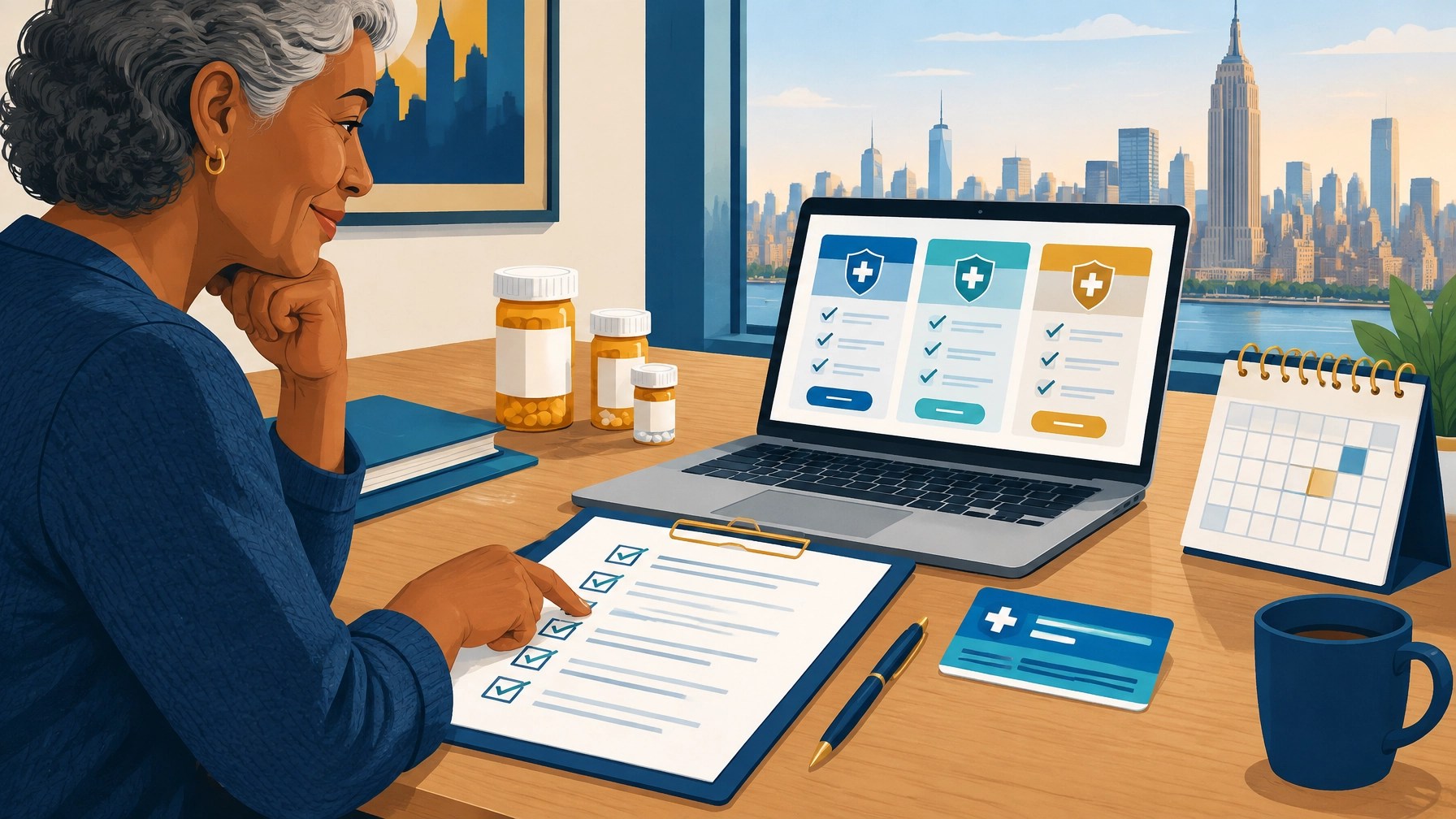
Step 5: Confirm Coverage and Set Reminders
Enrollment is not complete until you confirm the plan is active.
After selecting coverage:
- Save your eligibility notice and plan confirmation
- Confirm your first premium payment, if one is required
- Watch for your insurance ID card
- Verify your primary care provider and prescriptions
- Keep your renewal notice
- Report income, household, address, and coverage changes promptly
- Add renewal dates to your calendar
HealthCare.gov explains why reporting changes matters: a higher income may reduce your premium tax credit, while lower income or a larger household may increase your savings. Updating your information helps prevent tax-time surprises and ensures your coverage continues to match your situation.
A yearly benefit review is also smart. Your doctors may change networks, formularies can be updated, premiums may increase, and your income may look different from the year before.
You Do Not Have to Navigate This Alone
Whether you are checking Essential Plan eligibility, documenting a qualifying life event, or preparing for 2027 Open Enrollment, the right next step depends on your household, income, health needs, and timing.
Super Senior Services helps New Yorkers with personalized benefit reviews, straightforward explanations of premiums and cost-sharing, side-by-side carrier comparisons, and guidance from application through enrollment.
Contact Super Senior Services for personalized help if you want one-on-one guidance on your New York individual health coverage options and next steps.
Compliance note: Individual NPN, Stephen Jackson: 20707378. Corporate NPN, Super Senior Services: 21536694.
Category: individualhealth