
If you lost your New York Essential Plan coverage this summer, you are not alone, and you still may have options.
Approximately 450,000 New Yorkers were affected when the Essential Plan eligibility tier for people earning between 200% and 250% of the federal poverty level (FPL) ended on July 1, 2026. For many households, this created a sudden “coverage cliff”: a plan with a $0 monthly premium and low cost-sharing was no longer available, even though income had not changed.
The good news is that losing coverage may qualify you for a Special Enrollment Period (SEP). You may also qualify for financial assistance through a Qualified Health Plan (QHP), or for Medicaid coverage that could reach back to certain earlier medical bills.
The key is knowing your dates and acting carefully.
“Losing health insurance can be stressful and confusing, and New Yorkers deserve clear, reliable information as they make decisions about their care.”- New York Attorney General Letitia James, New York Attorney General guidance
Why So Many New Yorkers Lost Essential Plan Coverage
Beginning July 1, 2026, New York ended Essential Plan eligibility for households above 200% FPL. Before the change, the temporary 200%–250% FPL tier helped many New Yorkers maintain coverage with:
- $0 monthly premiums
- No deductible
- Low copays and other cost-sharing
- A relatively low maximum out-of-pocket limit
For a single adult, the affected income range was approximately $31,920 to $39,900 in 2026. For a household of four, it was approximately $66,000 to $82,500.
The Essential Plan is still available to eligible New Yorkers at or below 200% FPL. However, people above that threshold may need to transition to a QHP through the New York State of Health Marketplace.
This change can affect your budget quickly. A plan that previously cost $0 per month could be replaced by a QHP with a premium, deductible, copays, and coinsurance. That does not mean you should choose the first plan you see. It means your household needs a careful comparison.
What Qualifies You for a Special Enrollment Period?
A Special Enrollment Period allows you to enroll in or change Marketplace coverage outside the regular Open Enrollment window. The enrollment window is typically 60 days from the qualifying event, although the exact rules and effective date can depend on the event and your New York State of Health application.
Common qualifying life events include:
- Losing qualifying health coverage, including loss of Essential Plan eligibility
- Relocating to a new home, ZIP code, or county when the move meets Marketplace requirements
- Getting married
- Having a baby, adopting a child, or placing a child for foster care
- Experiencing a qualifying income change, such as a reduction that makes you newly eligible for Marketplace savings
- Turning 26 and aging off a parent’s health plan
- Losing coverage through an employer, spouse, or other family member
The loss of Essential Plan coverage in July was treated as a qualifying event for affected New Yorkers. For that specific transition, New York guidance gave impacted residents an extended opportunity to enroll before September 1, 2026.
If you are reading this after that deadline, do not assume every option is closed. You may have another qualifying event, such as an income change or loss of other coverage. You may also qualify for Medicaid or the Essential Plan based on your current household information.
Because SEP rules can be fact-specific, Stephen Jackson can help you review your situation and identify the next available path.
How to Avoid a Gap in Health Coverage
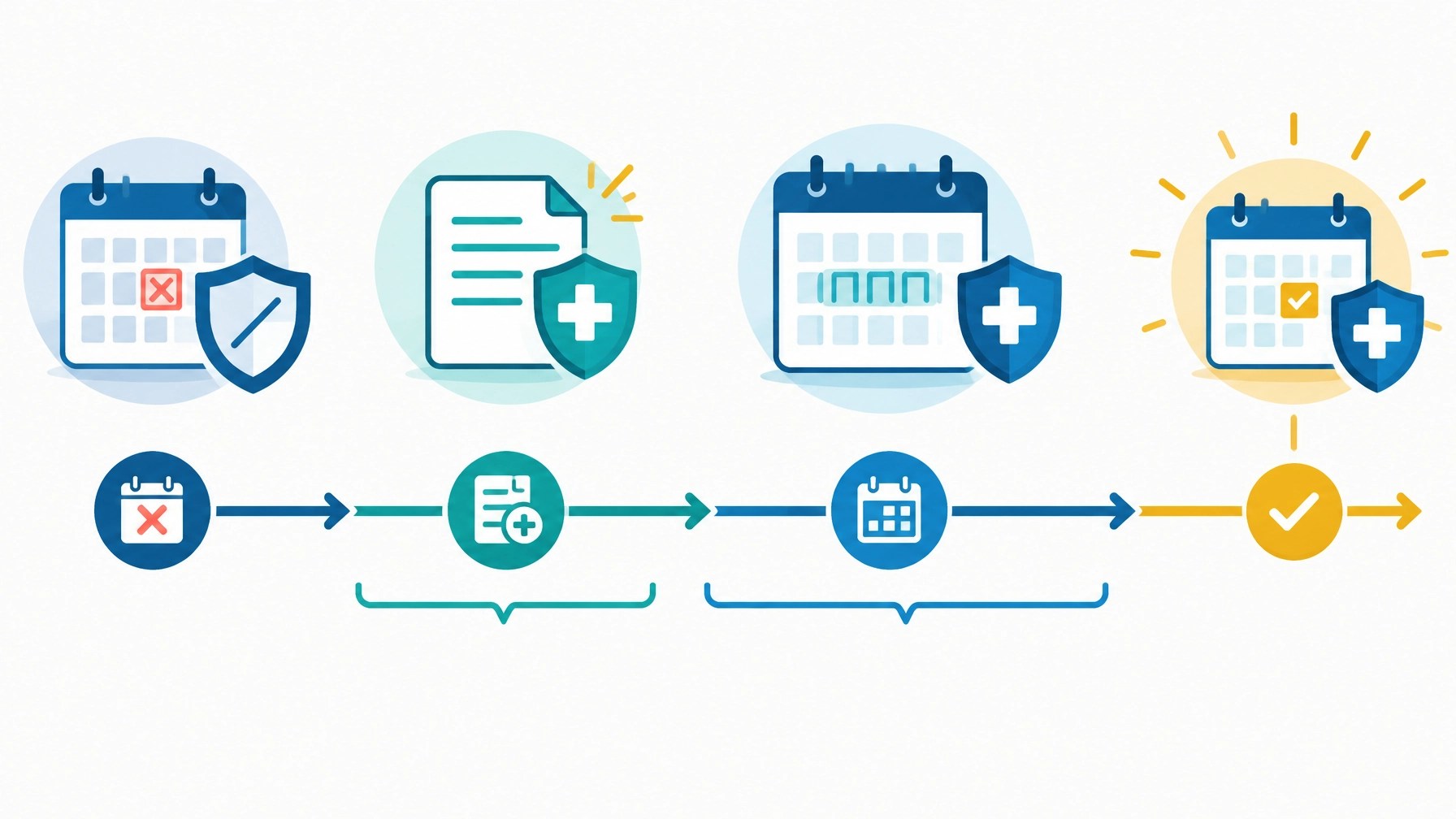
A qualifying event does not automatically place you into a new plan. You must complete the application, verify the event when requested, compare plans, and select coverage before your deadline.
Use this three-step process:
1. Confirm the date your old coverage ended
Your termination notice may list June 30, July 1, or another date. Keep the notice because New York State of Health may request documentation.
2. Apply as soon as possible
Do not wait until the final day of your SEP. Applications may require income information, household details, proof of coverage loss, and immigration or residency documentation where applicable.
3. Confirm the effective date before using care
QHP coverage is generally forward-looking. Unlike retroactive Medicaid, a Marketplace plan usually does not go back and pay claims from a period when you were uninsured.
In many cases, the date you select a plan affects when coverage begins. For example, a plan chosen by a monthly enrollment deadline may begin on the first day of the following month. However, effective dates vary by qualifying event and plan rules, so confirm the date shown in your New York State of Health enrollment results.
This matters financially. If you visit a doctor on September 28 but your new plan does not begin until October 1, that September visit may not be covered by the new QHP.
Before scheduling non-emergency care, check:
- Your confirmed plan start date
- Whether your doctor is in-network
- Whether your prescriptions are covered by the plan’s formulary
- Your deductible, copays, coinsurance, and out-of-pocket maximum
- Whether prior authorization is required
A quick review can prevent an unexpected bill of several hundred dollars, or more.
How Retroactive Medicaid Coverage May Help With Earlier Bills
Medicaid works differently from a QHP.
Under current New York Medicaid rules, Medicaid may cover eligible medical bills from up to three months, approximately 90 days, before the month you apply. This is not automatic, and it is not available simply because you lost the Essential Plan.
You generally must:
- Apply for Medicaid.
- Ask for retroactive coverage when you apply.
- Report the paid or unpaid medical bills from the relevant period.
- Meet Medicaid’s financial and other eligibility requirements for that earlier period.
- Use covered services and providers that meet Medicaid rules.
For example, if you apply in October, Medicaid may review certain eligible medical expenses from as early as July. A $250 doctor bill, a $600 laboratory bill, or a larger hospital balance could potentially be considered, but only if you qualified for Medicaid during the applicable period and the service meets program requirements.
Retroactive Medicaid is not a promise that every bill will be paid. The exact result can depend on the date of service, your eligibility, the type of treatment, provider participation, and whether you requested retroactive coverage properly.
Keep copies of:
- Medical bills
- Receipts and proof of payment
- Provider information
- Your Medicaid application and approval notices
- Any correspondence about your coverage end date
You can review general New York Medicaid information through the New York State Department of Health and New York State of Health. Ask an enrollment expert to confirm what you may qualify for before assuming that a bill will be covered.
How QHP Financial Assistance Can Reduce Your Costs
If you do not qualify for Medicaid or the Essential Plan, a Qualified Health Plan through New York State of Health may still be affordable with financial assistance.
Two forms of assistance are especially important:
Advance Premium Tax Credits
An Advance Premium Tax Credit (APTC) lowers your monthly premium. It is based on factors such as household income, household size, and the benchmark plan available in your area.
For example, suppose a QHP premium is $650 per month and your estimated APTC is $400 per month. Your monthly premium could be approximately $250. Your actual amount may be higher or lower.
Because APTC is based on estimated annual income, update your Marketplace application if your income changes. Otherwise, you could receive too much or too little assistance and face a tax reconciliation issue later.
Cost-Sharing Reductions
Cost-sharing reductions (CSRs) lower what you pay when you use care. They may reduce your deductible, copays, coinsurance, and maximum out-of-pocket costs.
To receive CSR benefits, you generally must qualify for them and select a Silver Marketplace plan. Choosing a Bronze or Gold plan may still allow you to use a premium tax credit, but it generally does not provide the same CSR savings.
Here is a simplified example:
- Standard Silver deductible: $5,000
- Silver plan with CSR: $1,000 deductible
- Standard specialist copay: $75
- CSR-enhanced specialist copay: $30
These are illustrative figures, not a quote. Your actual plan design will depend on your income, age, county, household size, and available insurers.

When comparing QHPs, do not focus only on the monthly premium. A $50-per-month plan could become expensive if you regularly need specialists, prescriptions, therapy, or outpatient procedures. Super Senior Services helps you compare the total picture so your coverage supports both your health and your financial stability.
What Happens If You Miss Your SEP?
If your SEP ends and you do not have another qualifying event, you may need to wait for the next Open Enrollment Period to select a QHP.
That does not necessarily mean you have no options. You may still be able to apply year-round if you qualify for:
- Medicaid
- The Essential Plan at or below 200% FPL
- Another qualifying program based on your household circumstances
For a QHP, the next 2027 Open Enrollment Period is scheduled for:
- November 1, 2026 through January 31, 2027
- December 15, 2026: deadline for a January 1, 2027 coverage start
If you enroll after December 15 but by January 31, your coverage may begin February 1, 2027, rather than January 1. Confirm the effective date with New York State of Health before assuming you are covered.
You can also review federal SEP guidance through HealthCare.gov and Marketplace information from CMS.
Your Next Step: Review Your Dates Before You Choose a Plan
A coverage loss can create confusion, but you do not have to navigate it alone. The right path may involve a SEP, Medicaid retroactive coverage, a subsidized Silver plan, or a carefully timed enrollment during the 2027 Open Enrollment Period.
Start by gathering your termination notice, current income information, household details, medical bills, prescriptions, and preferred doctors. Then get personalized guidance before choosing coverage.
Contact Stephen Jackson for help reviewing your New York coverage options. Super Senior Services can help simplify the comparison, explain premiums and cost-sharing, and guide you toward coverage that supports affordability, financial stability, and peace of mind.
Category: individualhealth
Compliance note: Individual NPN, Stephen Jackson: 20707378. Corporate NPN, Super Senior Services: 21536694.