
If you’re a New York small business owner, chances are your recent group health insurance renewal notice made you do a double-take. With single premiums hovering between $700 and $1,100 per employee per month (PEPM): and family plans easily climbing past $1,800 to $3,000+ PEPM: keeping top-tier coverage affordable feels like a moving target.
Even though New York regulators successfully trimmed requested 2026 small-group rate increases by an average of 45.8% (saving New York businesses roughly $810.8 million), many employers are still facing approved rate hikes in the 10% to 13% range. If you absorb that entire increase year after year, your bottom line takes a serious hit.
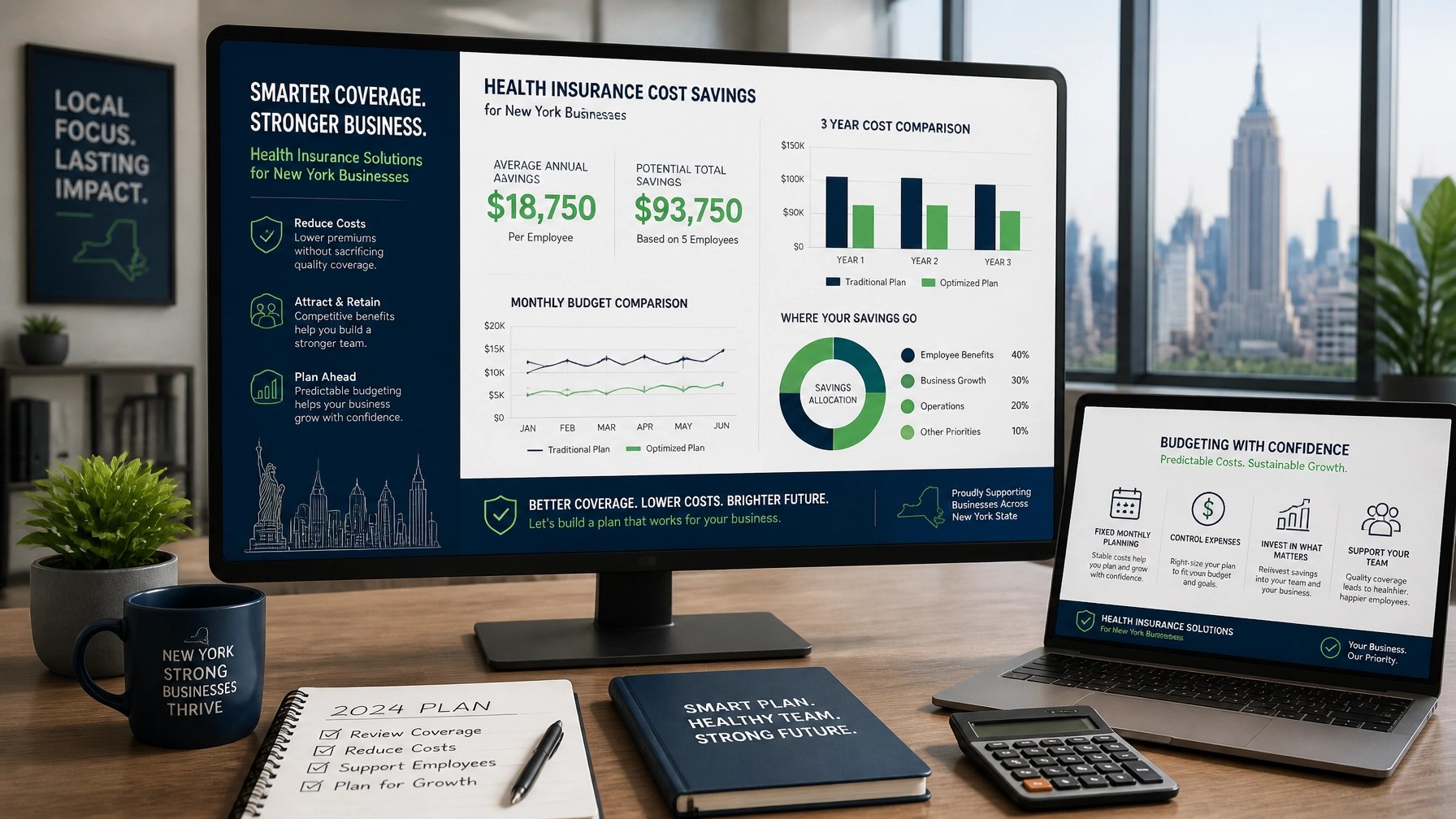
The good news? You don’t have to choose between bankrupting your business and offering subpar benefits that leave your team unprotected. By implementing a strategic, New-York-specific framework, many local employers are shaving up to 25% off their group health costs without sacrificing employee satisfaction.
Let's walk through how you can do the exact same thing for your business this year.
Step 1: Establish Your Cost Baseline and Audit Your Current Renewal
Before you can slash your expenses, you need complete clarity on what you are currently paying and where your dollars are going. Take a close look at your last year's total spend, your cost per employee, and how your workforce is distributed across single, employee-plus-spouse, and family tiers.
When your renewal notice arrives from carriers like EmblemHealth, Empire BCBS, or Oscar, don't just file it away. Review it line-by-line with a licensed professional. Check for unannounced network shifts or pharmacy formulary changes that could disrupt your employees' care while driving up your costs.
As regulatory experts at the New York State Department of Financial Services (DFS) emphasize, transparency in rate filings gives small business owners the power to question unjustified jumps and explore alternative plan designs.
"Managing healthcare costs isn't about cutting benefits until nothing is left; it's about aligning your coverage with how your team actually uses care, eliminating waste, and shopping smarter."

Step 2: Transition to Cost-Efficient Plan Structures (HMO vs. PPO vs. HDHP)
Historically, many small businesses defaulted to traditional Preferred Provider Organization (PPO) plans because employees liked the freedom of seeing any doctor without a referral. However, PPOs carry the highest premiums on the market.
In New York's 2026 insurance market, shifting your foundational plan design can yield immediate savings:
- Health Maintenance Organization (HMO) & Exclusive Provider Organization (EPO): By utilizing narrower provider networks and primary care coordination, HMO and EPO plans typically reduce single premiums by 15% to 25% compared to equivalent PPOs.
- High-Deductible Health Plans (HDHPs) paired with Health Savings Accounts (HSAs): HDHPs boast the lowest monthly premiums available. When paired with a strategic employer-funded HSA contribution (e.g., $500–$1,000 annually), you give your employees a tax-advantaged tool to cover routine out-of-pocket medical expenses while drastically reducing your monthly fixed overhead.
By modeling side-by-side quotes for HMO, EPO, and HSA-eligible HDHP options through the NY State of Health Official Small Business Marketplace, you can pinpoint the exact sweet spot where affordability meets robust protection.
Step 3: Optimize Your Employer/Employee Contribution Strategy
You don’t have to pay 80% or 100% of every employee's premium across all tiers to keep your team happy and loyal. Many growing New York businesses successfully pivot to a percentage-capped contribution model or a defined-contribution strategy.
Here are a few ways to restructure your contributions without hurting morale:
- Refine Tiered Splits: Instead of covering the exact same percentage for families as you do for single employees, consider maintaining a strong employer contribution (e.g., 80%) for employee-only coverage while adjusting dependent tier splits.
- Introduce Smart Opt-Out Incentives: For employees who already have robust coverage through a spouse's employer plan, offering a well-structured cash-in-lieu-of-benefits incentive can reduce overall headcounts on your group plan, lowering total premiums.
- HRA/HSA Integration: Pair a lower-premium HDHP with a Health Reimbursement Arrangement (HRA). You only pay when employees actually incur medical claims, rather than paying bloated fixed premiums every single month.
Step 4: Explore New York Specific Programs and Alternative Models
Depending on your employee count, average wages, and industry, New York offers unique pathways that many business owners overlook.
- Healthy NY Program: If you employ lower-wage workers and haven't offered group health insurance in the past year, you may be eligible for Healthy NY. This state-sponsored initiative provides reduced-cost coverage through participating commercial insurers. Applying is straightforward through your NYS-45 quarterly wage filings and carrier applications.
- Alternative Funding and DPC Arrangements: For businesses with stable, healthy workforces, exploring alternative funding models or pairing high-deductible coverage with Direct Primary Care (DPC) memberships can unlock significant savings. Starting recently, certain DPC monthly fees are even HSA-eligible under federal guidelines when kept within regulatory caps, enhancing your tax efficiency.
Step 5: Leverage Personalized Guidance to Simplify the Process
Navigating New York's complex healthcare regulations, carrier networks, and compliance mandates can feel overwhelming when you're busy running a business. That’s why partnering with an experienced advisory team makes all the difference.
At Super Senior Services, we specialize in cutting through the insurance jargon to deliver personalized, affordable group health insurance solutions tailored specifically to New York businesses. We take the guesswork out of annual renewals, review your census data, and shop top-rated carriers to ensure you get maximum value for every dollar you invest.
"When you have an expert guide who understands New York's unique small-group market inside and out, finding savings isn't a gamble: it's a predictable, step-by-step strategy."
Your 90-Day Action Plan for 2026 Savings
To hit your cost-reduction targets before your next renewal date, follow this streamlined timeline:
- 90 Days Out: Gather your current census data, enrollment tiers, and renewal notice. Audit your existing utilization and employee feedback.
- 60 Days Out: Work with your advisor to run comparative quotes across NY State of Health marketplace options, direct carrier plans, and alternative designs (like HDHP/HSA).
- 30 Days Out: Finalize your plan selection and contribution strategy. Communicate the changes clearly to your staff, focusing on how the new plan protects their health and take-home pay.
Ready to cut your group health costs by up to 25% while giving your team the coverage they deserve? Contact our team of experts today for a comprehensive, no-obligation benefit review tailored to your New York business.

{“@type”:”Article”,”author”:{“name”:”Super Senior Services”,”@type”:”Organization”},”@context”:”https://schema.org”,”headline”:”The Proven NY Employer’s Framework for Cutting Group Health Costs by 25% in 2026″,”publisher”:{“logo”:{“url”:”https://superseniorservices.com”,”@type”:”ImageObject”},”name”:”Super Senior Services”,”@type”:”Organization”},”description”:”Discover a step-by-step framework for New York small business owners to cut group health insurance costs by up to 25% in 2026 without sacrificing quality coverage.”,”mainEntityOfPage”:{“@id”:”https://superseniorservices.com/business”,”@type”:”WebPage”}}