
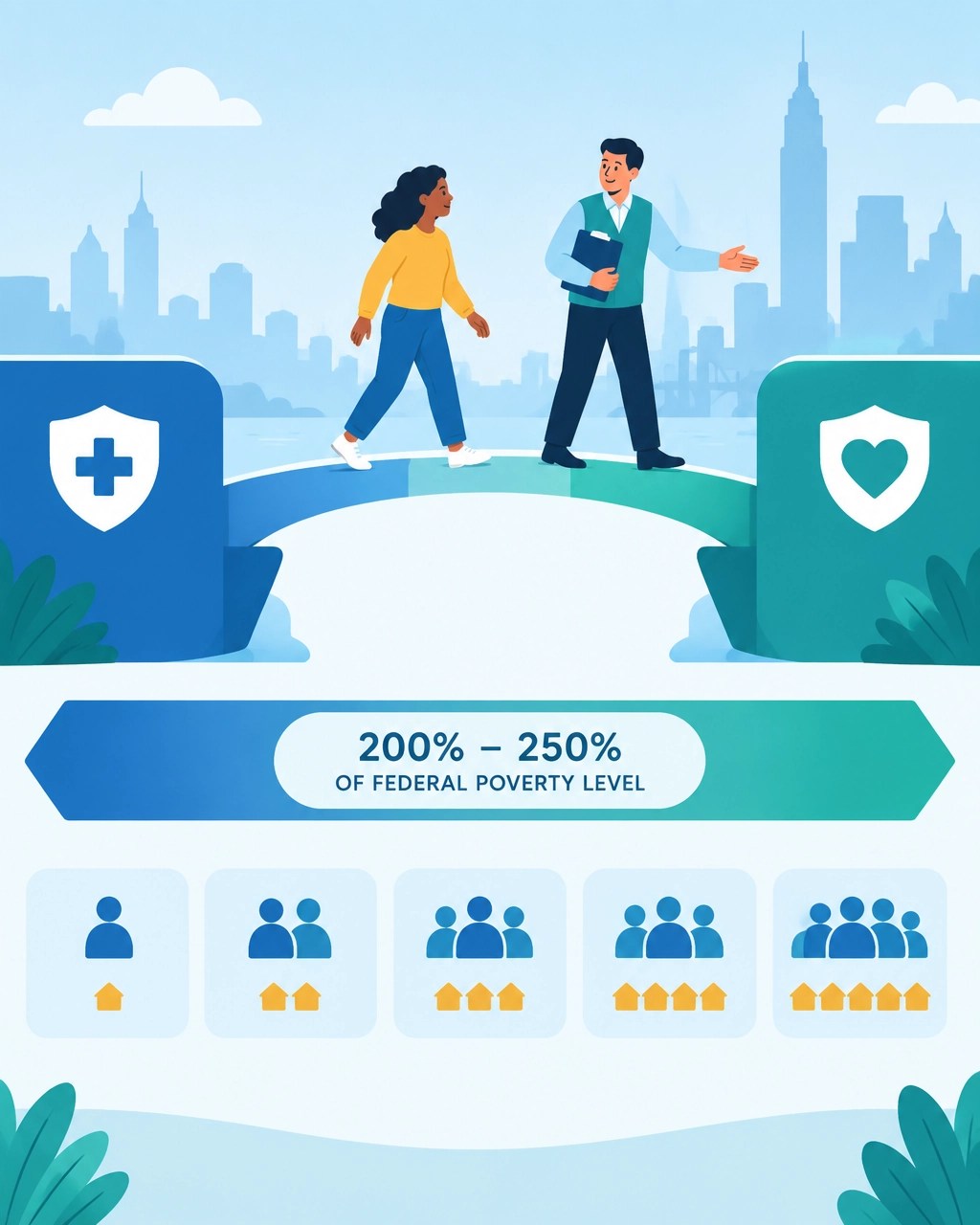
If you live in New York and your household income falls between 200% and 250% of the Federal Poverty Level (FPL), your health insurance options changed in 2026.
The New York Essential Plan income limit returned to 200% FPL on July 1, 2026. That change affected approximately 450,000 New Yorkers who previously qualified for the expanded Essential Plan. If you were in that group, your next coverage option is generally a Qualified Health Plan (QHP) through NY State of Health.
The good news? You still have options, and you do not have to compare them alone.
“This change will eliminate Essential Plan eligibility for New Yorkers earning between 200 and 250 percent of the federal poverty level.” : New York Attorney General guidance
What the Essential Plan coverage cliff means
The Essential Plan is a New York health insurance program designed for eligible residents with lower incomes. It generally offers affordable coverage, limited cost-sharing, and year-round enrollment.
Before July 1, 2026, certain New Yorkers with household income up to 250% FPL could qualify. The expanded 200–250% FPL eligibility tier has now ended.
For affected enrollees, June 30, 2026, was generally the final day of Essential Plan coverage under the former income rules. July 1, 2026, marked the transition point to other coverage options.
The approximate annual income bands for the affected 200–250% FPL group are:
- One-person household: $31,920–$39,900
- Two-person household: $43,280–$54,100
- Three-person household: $54,640–$68,300
- Four-person household: $66,000–$82,500
These figures are useful starting points, but eligibility depends on your household size, projected annual income, immigration and residency information, and other application details. Your income may also change during the year, so it is important to keep your marketplace application updated.
If your income is at or below 200% FPL, you may still qualify for the Essential Plan. The Essential Plan remains available with year-round enrollment for eligible New York residents. Consequently, if your income has decreased since your last application, you may want to check your eligibility again through NY State of Health’s Essential Plan information.
A personalized review can help determine whether you belong in the Essential Plan, a QHP, or another available program. Super Senior Services can help you review your situation and understand your next step.
The transition Special Enrollment Period is now closed
New Yorkers affected by the 200–250% FPL Essential Plan change were given a special enrollment opportunity through NY State of Health.
The transition Special Enrollment Period ran from:
- May 16 through August 30, 2026
That transition window is now closed.
The purpose of the Special Enrollment Period was to give affected New Yorkers time to select a QHP, apply for financial assistance, and avoid a break in coverage after the Essential Plan change. If you missed the August 30 deadline, you may no longer be able to enroll based solely on the Essential Plan transition.
However, another qualifying life event may still open a Special Enrollment Period. Examples can include:
- Losing other health coverage
- Getting married or divorced
- Having a baby or adopting a child
- Moving to New York or to a new service area
- Becoming newly eligible for marketplace savings
- Experiencing certain changes in household size or income
Special Enrollment Period rules can be specific. You may need to provide documents and complete your application within a limited timeframe. Do not assume you have to wait until the next annual enrollment window without checking first.
You can review official enrollment information at NY State of Health and the federal HealthCare.gov Special Enrollment Period guide. If you are unsure whether your circumstances qualify, Super Senior Services can help you organize the details before you apply.
What changes when you move to a QHP?
A Qualified Health Plan is private health insurance certified by the Marketplace. It must cover essential health benefits, follow Affordable Care Act requirements, and meet established limits on cost-sharing such as deductibles, copayments, coinsurance, and annual out-of-pocket maximums. HealthCare.gov explains QHP standards here.
Compared with the Essential Plan, a QHP may involve:
- A monthly premium, which is the amount you pay to keep coverage active
- A deductible, or the amount you may pay before the plan begins sharing certain costs
- Copayments for services such as primary care visits or prescriptions
- Coinsurance, which is your percentage of the cost after the deductible
- Different doctor and hospital networks
- A different prescription drug formulary, meaning the list of medications covered by the plan
The plan with the lowest premium is not always the plan that costs you the least overall. For example, a plan with a $25 monthly premium might have a higher deductible, while a plan with a $75 premium might offer lower copayments for regular care. Your best choice depends on how you use healthcare, which doctors you want to keep, and which medications you take.
That is why a side-by-side review matters. Super Senior Services simplifies the comparison by looking at the full cost picture: not just the monthly price.
How premium tax credits and Silver savings can reduce costs
Many New Yorkers transitioning to a QHP may qualify for financial assistance through NY State of Health.
A premium tax credit lowers your monthly premium. Depending on your household income and other eligibility factors, the credit may substantially reduce what you pay each month.
You may also qualify for cost-sharing reductions, sometimes called “extra savings.” These can reduce your deductible, copayments, coinsurance, and annual out-of-pocket maximum.
There is one important detail: cost-sharing reductions are generally available only when you select a Silver-level QHP. A Silver plan may therefore offer better overall value than a lower-premium Bronze plan if you expect to visit doctors regularly, fill prescriptions, or manage an ongoing health condition.
Before selecting a plan, compare:
- Monthly premium after any tax credit
- Annual deductible for medical services and prescriptions
- Primary care, specialist, urgent care, and hospital costs
- Provider network and whether your preferred doctors participate
- Prescription formulary and medication copayments
- Annual out-of-pocket maximum
- Eligibility for Silver plan cost-sharing reductions
You can learn more about marketplace savings through HealthCare.gov’s premium and out-of-pocket cost information and cost-sharing reduction guidance.

Your 2027 New York open enrollment calendar
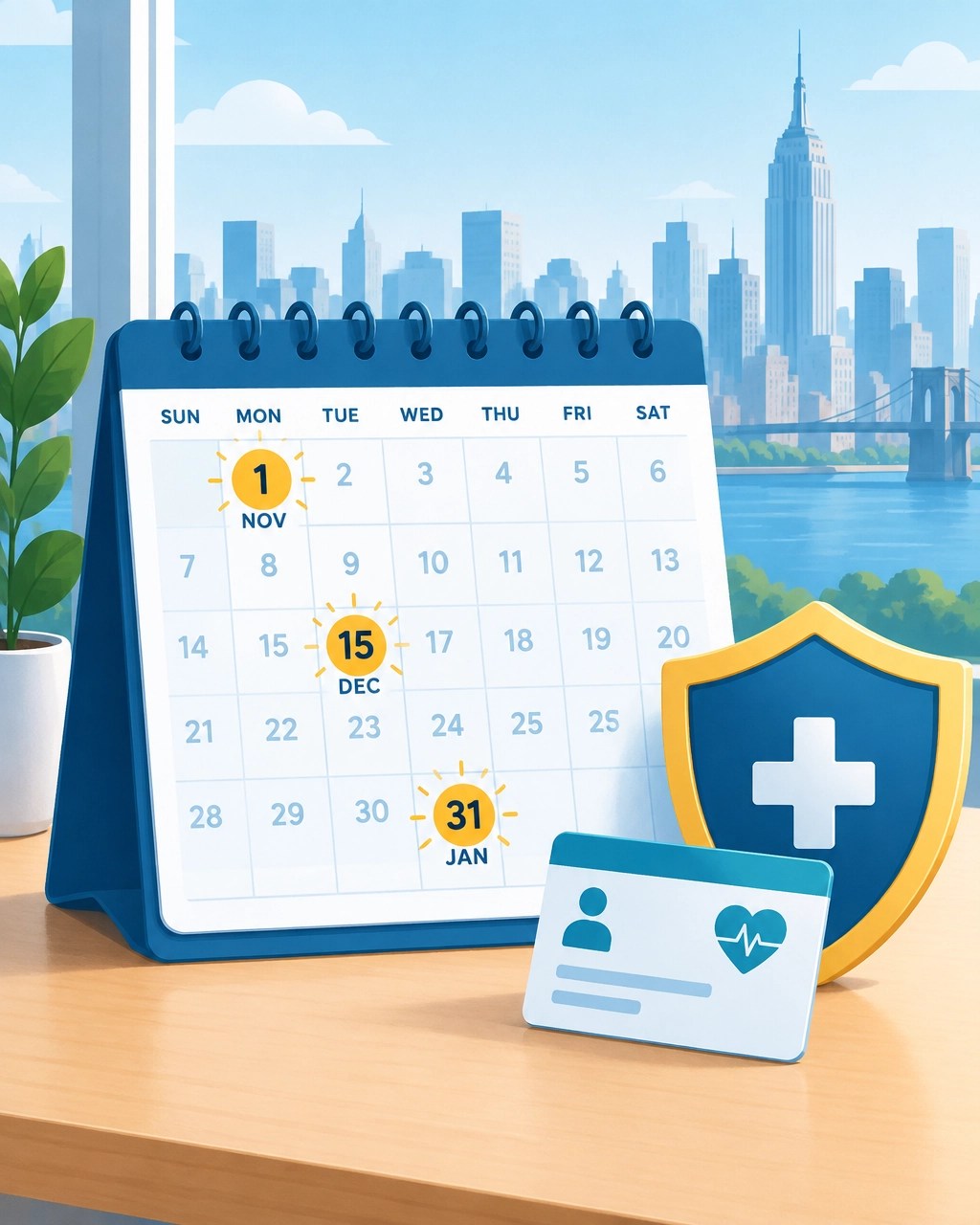
If you do not qualify for another Special Enrollment Period, the next major opportunity to enroll in a QHP is the 2027 open enrollment period through NY State of Health.
Mark these dates:
- November 1, 2026: 2027 open enrollment begins
- December 15, 2026: Target deadline for coverage beginning January 1, 2027
- January 31, 2027: 2027 open enrollment ends
If you enroll by December 15, your coverage is generally scheduled to begin January 1, 2027. Applications submitted after that date may result in a later effective date, often February 1, depending on the marketplace rules and your enrollment timing.
The NY State of Health 2027 enrollment information should remain your primary source for official updates, deadlines, and application instructions.
Do not wait until the final week. Gather your projected household income, Social Security numbers or immigration documents when applicable, current provider information, and prescription list ahead of time. Early preparation gives you time to resolve questions and compare plans carefully.
A simple plan for moving forward
If you were affected by the Essential Plan change, start with these steps:
- Confirm your current eligibility. If your income is now at or below 200% FPL, check whether you qualify for the Essential Plan again.
- Review whether you have a new qualifying life event. A recent loss of coverage, move, marriage, birth, or other change may create a new SEP.
- Prepare for 2027 open enrollment. Write down your doctors, medications, preferred hospitals, and realistic healthcare budget.
- Compare the complete plan design. Look beyond premiums to deductibles, coinsurance, networks, formularies, and out-of-pocket limits.
- Apply through NY State of Health. Financial assistance is determined through the marketplace application.
- Ask for help when the details feel overwhelming. A benefits review can help you avoid choosing a plan that looks affordable but does not fit your healthcare needs.
The Essential Plan transition is a major change, but it does not mean you are out of options. With the right information, you can find coverage that supports your health, budget, and peace of mind.
Super Senior Services provides personalized guidance, comprehensive benefit reviews, and side-by-side QHP comparisons for New York residents. Contact Stephen Jackson and the Super Senior Services team to make your next enrollment decision with greater clarity and confidence.
Compliance note: Individual NPN : Stephen Jackson: 20707378. Corporate NPN : Super Senior Services: 21536694.
Category: Individual Health