
If your New York health coverage changed after the Essential Plan cliff, you are not alone: and you still have a path forward.
Beginning July 1, 2026, New York discontinued Essential Plan eligibility for people in the 200%–250% of the federal poverty level (FPL) income range. Approximately 450,000 New Yorkers were affected and directed toward Qualified Health Plans (QHPs) through the NY State of Health Marketplace.
The transition deadline of August 30, 2026, has now passed. That makes the next enrollment window especially important.
The 2027 NY State of Health Open Enrollment Period runs from November 1, 2026, through December 15, 2026. If you enroll by December 15, your coverage can begin January 1, 2027.
Whether you need new coverage, want to change plans, or simply want to make sure your current plan still fits your life, this is your opportunity to reset with confidence.
Why the 2027 Enrollment Window Matters After the Essential Plan Cliff
The Essential Plan provided affordable coverage with low premiums and predictable out-of-pocket costs for eligible New Yorkers. Once the 200%–250% FPL eligibility group moved out of that program, many people had to consider QHPs instead.
A QHP is an Affordable Care Act-compliant plan certified by the Marketplace. As HealthCare.gov explains, it provides essential health benefits, follows limits on cost-sharing, and covers services such as doctor visits, hospital care, preventive care, and prescription drugs.
However, a QHP is not automatically the right plan simply because it is available. You may have several choices with different:
- Monthly premiums (the amount you pay to keep coverage active)
- Annual deductibles (what you pay before the plan begins sharing many costs)
- Copayments and coinsurance (your share of covered services)
- Provider networks
- Prescription formularies
- Out-of-pocket maximums
That is why comparing plans carefully matters. A plan with the lowest premium may cost more when you visit a specialist or fill a prescription. A plan with a higher premium may offer a lower deductible and more predictable costs.
The 2027 window gives you a fresh chance to compare those tradeoffs instead of accepting a plan that does not match your health needs or budget. Super Senior Services can help you review your options clearly and make a decision based on the full cost of coverage: not just the monthly bill.
Your 2027 NY Health Insurance Deadlines
Mark these dates now:
- November 1, 2026: Open Enrollment begins for 2027 individual health insurance coverage through NY State of Health.
- December 15, 2026: Deadline to enroll or change plans for coverage beginning January 1, 2027.
Waiting until the final days can create unnecessary stress. You may need to gather income documents, confirm your doctors, review prescriptions, compare plan networks, and estimate your household income for the coming year.
Consequently, starting early gives you time to ask questions and avoid rushing into a plan.
If your current coverage ends, changes, or becomes unaffordable outside Open Enrollment, you may also have options based on a qualifying life event, such as losing coverage, moving, getting married, or having a baby. NY State of Health can explain whether you qualify for a Special Enrollment Period.
For the upcoming 2027 window, though, the key action is simple: begin reviewing your information before November 1, then complete enrollment by December 15 if you want coverage to start on January 1. If you would like help preparing, contact Super Senior Services before enrollment opens.
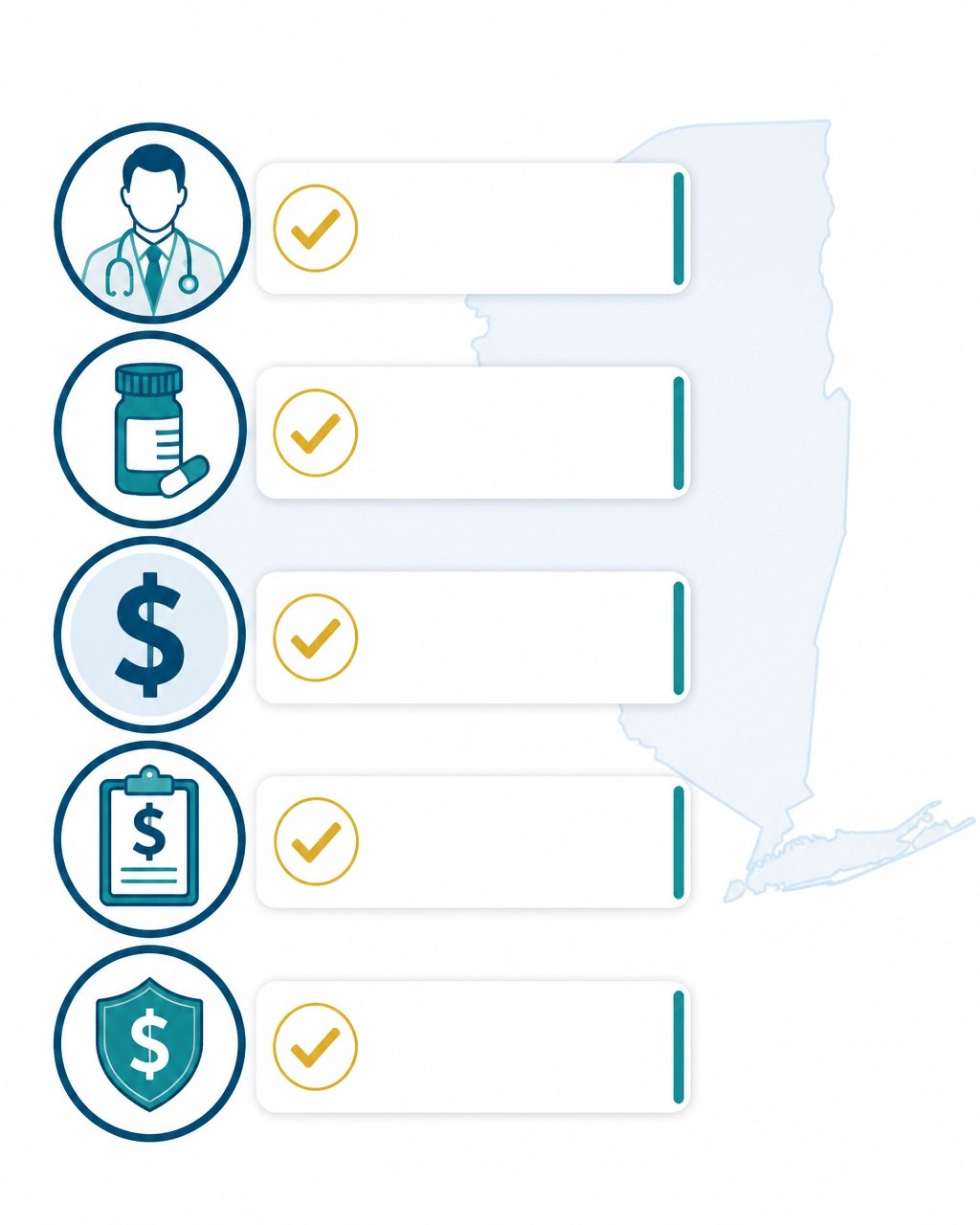
Review These Five Details Before You Choose a Plan
1. Your doctors and healthcare providers
Start with the people you already trust.
Check whether your primary care physician, specialists, hospitals, urgent care centers, and preferred labs participate in the plan’s network. Even if a doctor accepts insurance generally, that does not mean they participate in every plan offered by the same carrier.
Look for the plan’s provider directory, but also call the provider’s office to confirm network participation for the specific 2027 plan. This small step can help you avoid unexpected out-of-network charges.
Your coverage should work where you receive care. Super Senior Services can help you make provider access part of the comparison from the beginning.
2. Your prescriptions and the plan’s formulary
A formulary is the list of prescription drugs a plan covers. Plans may place medications in different tiers, which can affect what you pay (for example, a generic drug may cost $10–$20, while a preferred brand or specialty medication may cost significantly more).
Check:
- Whether each medication is covered
- Which tier applies
- Whether prior authorization is required
- Whether you must try another medication first
- Whether your pharmacy is preferred or standard
- Whether mail-order service is available
A plan with a low premium may not be affordable if your prescriptions are placed on expensive tiers. Reviewing the formulary in advance can protect both your health and your wallet.
3. Premiums and available premium tax credits
A premium tax credit can reduce the monthly cost of a Marketplace plan. As HealthCare.gov explains, the credit is based on information such as your household size and estimated annual income.
You can generally apply the credit in advance to lower your monthly premium. For example, if a plan costs $500 per month and you qualify for a $300 monthly credit, your estimated payment could be $200 per month.
Your actual savings depend on your circumstances and the information submitted through NY State of Health. Report income changes promptly. If your final annual income is higher than estimated, you may have to reconcile some advance credit when filing your federal tax return.
For a helpful refresher, review our guide on what the Premium Tax Credit is. Then let us help you estimate the practical monthly cost of your 2027 options.
4. Deductibles, copayments, and coinsurance
Your premium is only one part of the cost.
A deductible is the amount you may pay before your plan begins paying for many covered services. A copayment is a fixed amount (such as $25 for a primary care visit). Coinsurance is a percentage of the allowed cost (such as 20% after you meet your deductible).
Ask yourself:
- How often do you visit a doctor?
- Do you expect surgery, therapy, or ongoing specialist care?
- Could you comfortably handle a $1,000–$5,000 medical bill?
- Do you prefer a higher monthly premium for more predictable costs?
- Are your common services subject to a copay before the deductible?
The best plan is not always the plan with the lowest premium. It is the plan whose total cost structure makes sense for your expected care.
5. The out-of-pocket maximum
The out-of-pocket maximum is the most you pay during a plan year for covered, in-network services, subject to the plan’s rules. Once you reach that limit, the plan generally pays 100% of covered in-network services for the rest of the year.
This amount is one of your most important financial safety nets. Compare it carefully, especially if you have a chronic condition, anticipate major treatment, or want stronger protection against a serious medical event.
A plan’s out-of-pocket maximum can be much higher than its deductible. Look at both numbers before enrolling. Super Senior Services simplifies this side-by-side review so you can see where your financial stability is strongest.

Understand Bronze, Silver, and Gold Metal Levels
Marketplace metal levels describe how you and the plan generally divide covered healthcare costs. They do not measure the quality of care.
- Bronze: Usually the lowest monthly premium and highest costs when you receive care. This may appeal to people who primarily want protection from major medical expenses.
- Silver: A middle-ground option for premiums and out-of-pocket costs. If you qualify for cost-sharing reductions (CSRs), you generally need to select a Silver plan to receive them.
- Gold: Usually a higher monthly premium but lower costs when you use medical services. This may make sense if you expect frequent visits, ongoing prescriptions, or regular treatment.
CSRs can reduce deductibles, copayments, coinsurance, and the out-of-pocket maximum. HealthCare.gov’s explanation of cost-sharing reductions notes that these extra savings are available only with a Silver plan when you qualify.
In practical terms, a Silver plan with CSRs may be more affordable overall than a Bronze plan: even if the Bronze premium looks lower at first glance. Compare your estimated annual premium plus likely healthcare expenses, not just one number.
Build Your Personal Enrollment Checklist Now
Before November 1, gather:
- Your household members’ names and dates of birth
- Social Security numbers or immigration documentation, if applicable
- Recent pay stubs, tax information, or self-employment income records
- Your best estimate of 2027 household income
- Current doctors and preferred hospitals
- A complete prescription list
- Your current plan information, if you have coverage now
- Questions about deductibles, networks, formularies, or tax credits
Your income estimate matters because it can affect your premium tax credit and cost-sharing eligibility. If you are self-employed or your income changes throughout the year, plan to revisit your Marketplace application when circumstances change.
The NY State of Health Marketplace offers official enrollment tools, plan information, and support. You can also work with an experienced advisor who will help you understand the choices without overwhelming you.

Get Personalized, Transparent Help for 2027
The Essential Plan cliff changed the coverage landscape for many New Yorkers. But it does not have to leave you stuck or uncertain.
The 2027 Open Enrollment Period is your chance to review your doctors, prescriptions, premiums, deductibles, metal level, and financial protection in one organized process. Super Senior Services provides personalized guidance for New York residents, helping you compare trusted plan options, identify potential savings, and choose coverage that supports your health and budget.
You deserve clarity: not a pile of confusing plan documents.
Contact Super Senior Services to prepare for the November 1 enrollment start and pursue coverage that brings affordability, confidence, and peace of mind into 2027.
Compliance note: Individual NPN: Stephen Jackson : 20707378. Corporate NPN: Super Senior Services : 21536694.
Category: Individual Health Insurance