
As a New York small business owner, providing top-tier benefits is one of the most powerful ways to attract and retain top talent. However, navigating Empire State insurance regulations: from the New York State of Health (NYSOH) SHOP marketplace to Department of Financial Services (DFS) mandates: can feel like walking through a minefield. Many entrepreneurs unknowingly make critical missteps that drive up costs, trigger coverage denials, or leave their team underinsured.
Securing NY small business group health insurance doesn't have to be an uphill battle. By identifying common pitfalls and adopting proactive strategies, you can lock in affordable employee coverage while protecting your bottom line. At Super Senior Services, we believe in pairing expert guidance with personalized support to ensure your business thrives.
Here are 7 of the most common mistakes New York employers make with group health insurance: and how you can fix them today.
1. Miscalculating Full-Time Equivalents (FTEs) and Group Size
One of the most frequent administrative errors occurs right at the start: miscounting your employee headcount. New York follows specific federal and state rules (such as IRC 4980H) to determine small-group eligibility, typically capping small groups at 50 or fewer full-time equivalent employees.
- The Mistake: Treating part-time or seasonal workers incorrectly, or improperly including independent contractors (1099 workers) in your census. Consequently, businesses often miscalculate their group size, leading to unexpected underwriting denials or placement in the wrong market segment.
- The Fix: Review payroll records meticulously. Remember that two part-time employees working a combined 40 hours per week generally equal one FTE. If you are unsure, consult resources on the New York Department of Financial Services website or partner with an expert who can audit your census before submission.
2. Ignoring Minimum Participation and Contribution Thresholds
NY carriers enforce strict underwriting rules regarding how many employees must enroll and how much the employer must chip in.
- The Mistake: Assuming you can offer a nominal contribution (e.g., 10% or 20% of the premium) or moving forward when too many employees opt out. Most commercial carriers in New York require at least 75% of eligible employees to enroll (unless they have valid waivers, such as coverage under a spouse's plan) and mandate that the employer pay at least 50% of the single-coverage premium.
- The Fix: Structure your contributions to meet or exceed carrier minimums (e.g., funding 50% to 75% of employee-only premiums). If participation is tight, survey your staff ahead of open enrollment to understand their waiver statuses and ensure you clear the required thresholds.
3. Overlooking NYSOH SHOP and Valuable Tax Credits
Many New York business owners assume health marketplaces are strictly for individuals. As a result, they miss out on structured programs designed specifically for small businesses.
- The Mistake: Staying off-exchange by default without checking if your business qualifies for the Small Business Health Options Program (NYSOH SHOP). You might be leaving thousands of dollars in federal small-business health care tax credits on the table.
- The Fix: Evaluate whether your business has fewer than 25 FTEs, pays average annual wages below the threshold, and contributes at least 50% toward employee premiums. Utilizing SHOP can unlock tax credits worth up to 50% of your premium contributions (up to 35% for tax-exempt organizations), making affordable employee coverage much easier to achieve.
4. Falling Trap to the Healthy NY Prior-Coverage Trap
Healthy NY is a wonderful state-sponsored program offering standardized, budget-friendly coverage for small businesses and sole proprietors. However, its entry rules are notoriously rigid.

- The Mistake: Applying for Healthy NY after having provided comprehensive group medical and hospital coverage in the past 12 months while contributing more than $50 per month per employee. Doing so leads to immediate application rejection.
- The Fix: Review your company's coverage history before applying. If you've maintained traditional group health insurance recently, you may need to wait out the lookback period or explore alternative community-rated small-group plans available across New York.
5. Choosing Plans Solely on Lowest Monthly Premiums
When insurance renewal notices arrive with steep rate hikes, the knee-jerk reaction is to select the absolute cheapest plan on the market.
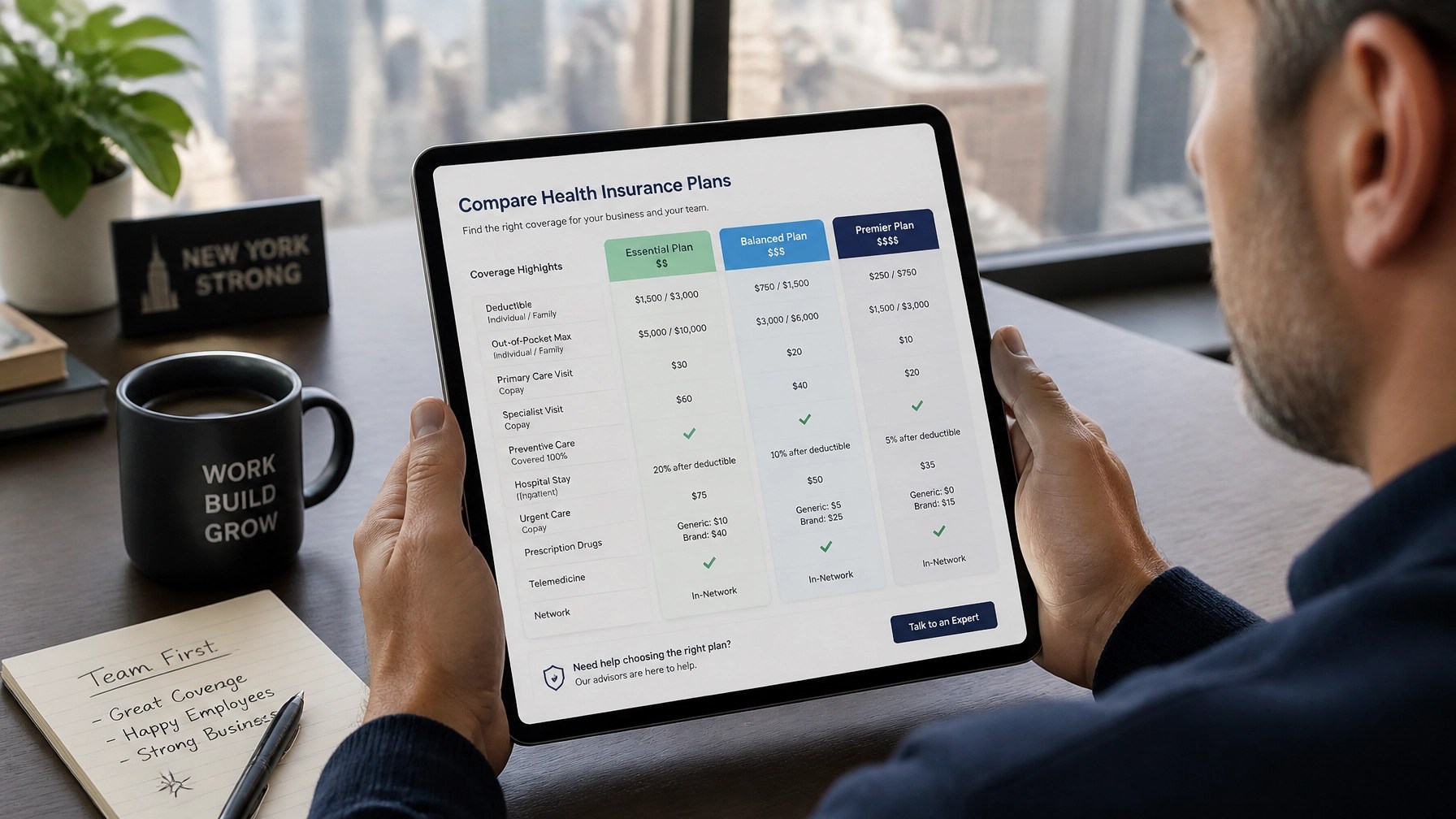
- The Mistake: Focusing exclusively on the monthly premium while ignoring out-of-pocket costs, deductibles, and network adequacy. A low-premium plan with a staggering $8,000 deductible and a narrow regional network can leave your employees facing massive bills for routine care, driving up dissatisfaction and workplace stress.
- The Fix: Take a holistic view of your policy. Balance premiums against copays, coinsurance, prescription formularies, and local provider networks (such as major hospital systems across New York). Conducting annual reviews with personalized support ensures your plan matches actual employee healthcare utilization.
6. Letting Renewals Auto-Pilot Without Re-Shopping
New York small-group health insurance premiums face upward pressure year after year, with average rate increases frequently ranging between 8% and 18%.
- The Mistake: Simply signing and returning your insurance carrier’s renewal notice without comparing competing quotes in your region. Auto-renewing year after year is a guaranteed way to overpay for benefits.
- The Fix: Treat your health insurance renewal as an annual business review. Shop the market 60 to 90 days before your policy expiration date. Comparing carriers across New York allows you to leverage competition and secure better rates or richer benefits for your staff.
7. Neglecting State Compliance and Ancillary Mandates (DBL & PFL)
Managing health insurance isn't just about medical coverage: New York has strict statutory requirements that catch employers off guard.
- The Mistake: Setting up group medical insurance while completely forgetting mandatory New York Disability Benefits Law (DBL) and Paid Family Leave (PFL) filings. Additionally, failing to maintain proper ERISA plan documents or mishandling protected health information (PHI) can trigger severe compliance penalties.
- The Synthetic Solution: Work with an experienced broker who coordinates your medical, DBL, and PFL packages seamlessly under compliant state guidelines.
Secure Better Coverage for Your New York Business Today
Avoiding these seven pitfalls doesn't have to be a solo mission. At Super Senior Services, we specialize in helping New York business owners navigate complex health insurance decisions with confidence, transparency, and tailored solutions.
Ready to optimize your employee benefits and secure truly affordable employee coverage? Let our team provide the personalized support your business deserves.

Contact Stephen Jackson and our team today to schedule your comprehensive small-group health review.
- Compliance Note: Individual NPN (Stephen Jackson): 20707378 | Corporate NPN (Super Senior Services): 21536694. Approved Category Slug:
businesshealth.
{“@type”:”Article”,”author”:{“name”:”Stephen Jackson”,”@type”:”Person”},”@context”:”https://schema.org”,”headline”:”7 Mistakes You’re Making with New York Small Business Group Health Insurance (and How to Fix Them)”,”publisher”:{“logo”:{“url”:”https://superseniorservices.com”,”@type”:”ImageObject”},”name”:”Super Senior Services”,”@type”:”Organization”},”description”:”Discover 7 common mistakes New York small business owners make with group health insurance and learn how to secure affordable employee coverage with expert guidance.”,”mainEntityOfPage”:{“@id”:”https://superseniorservices.com/businesshealth/7-mistakes-youre-making-with-small-business-group-health-insurance-and-how-to-fix-them”,”@type”:”WebPage”}}