
If you lost New York’s Essential Plan coverage on July 1, 2026, you are not alone, and you still have options.
When the Essential Plan expansion ended, roughly 450,000 New Yorkers were affected, including households between 200% and 250% of the Federal Poverty Level (FPL). For many people, the change meant moving from $0 coverage to a Qualified Health Plan (QHP) with a monthly premium, deductible, and more decisions to make.
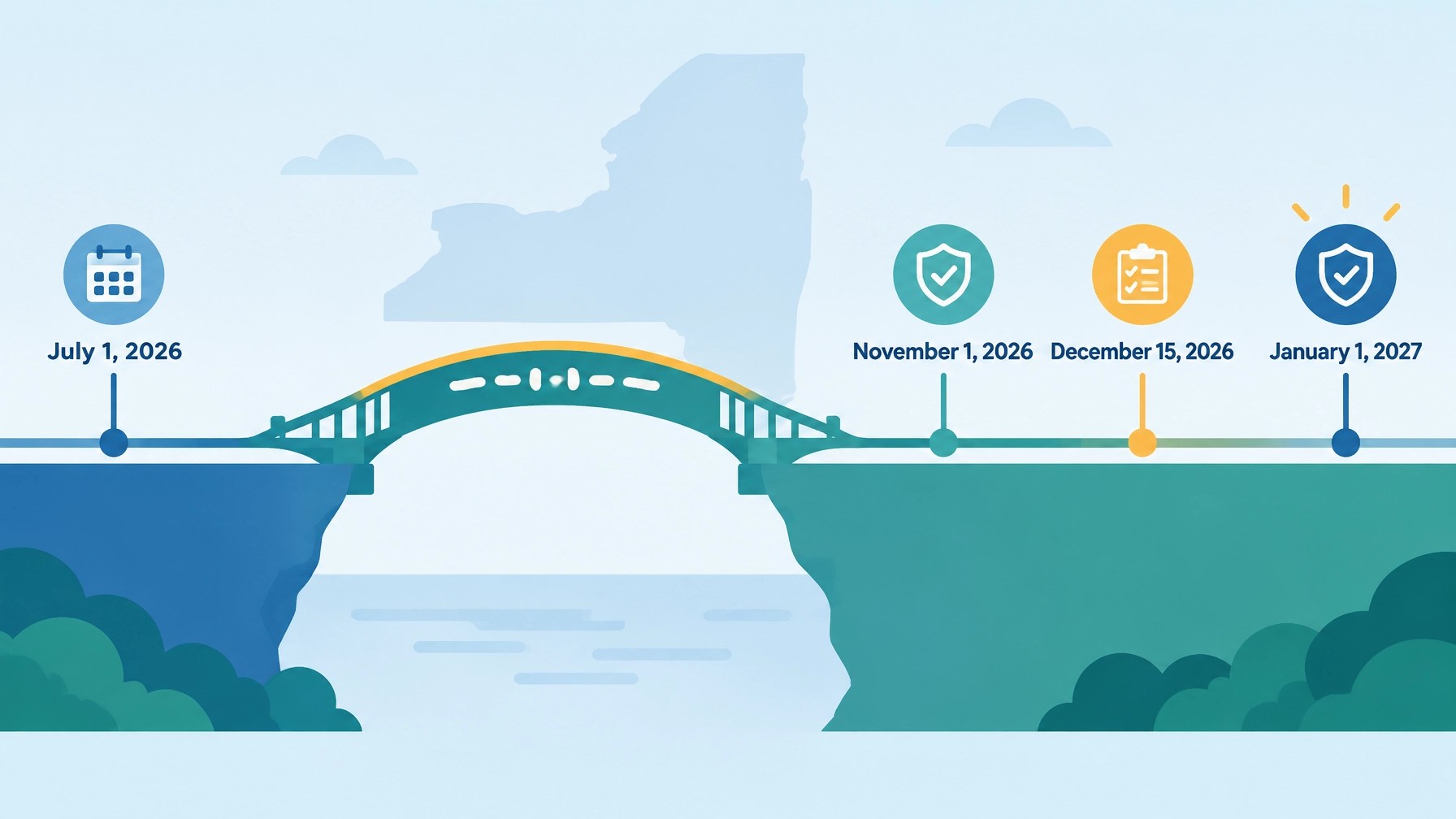
That can feel overwhelming. The good news is that you do not have to wait and hope things work out. Here are five practical moves to make before New York’s 2027 Open Enrollment Period begins on November 1, 2026.
1. Confirm why your coverage ended, and save every notice
Start by reviewing your NY State of Health notices, account messages, and mail. Look for:
- The date your Essential Plan coverage ended
- Your household income used for eligibility
- Your household size
- Any Special Enrollment Period (SEP) deadline
- Instructions for moving into a Qualified Health Plan
- Whether you were offered retroactive coverage
The Essential Plan expansion served households with income between 200% and 250% of FPL. In approximate 2026 figures, 200% FPL is:
- One person: $31,920
- Two people: $43,280
- Three people: $54,640
- Four people: $66,000
For planning purposes, the affected 200%-250% range was approximately $31,920-$39,900 for one person and $43,280-$54,100 for two people.
Your eligibility depends on your actual household and income information, so do not rely on an old application if your circumstances have changed. Save your termination notice, income documents, and any messages from NY State of Health. You may need them to prove a loss of minimum essential coverage or resolve an enrollment issue.
Why this helps your wallet: Knowing the exact termination date can determine whether you qualify for a SEP, whether retroactive coverage may apply, and how quickly you need to act.
If you want a second set of eyes, Super Senior Services can review your situation and help organize the next steps.
2. Recheck whether you qualify for Medicaid or the remaining Essential Plan
The Essential Plan did not disappear entirely. It remains available year-round to eligible New Yorkers at or below 200% FPL, with $0 premiums and no deductible for qualifying enrollees.
That means an income change could make a major difference. For example, if your work hours were reduced, you changed jobs, your self-employment income declined, or your household grew, you may now fall below the 200% threshold.
You may also qualify for Medicaid if your income is lower than the Essential Plan limit. Because Medicaid and the remaining Essential Plan can generally be accessed outside the annual Open Enrollment Period, you do not necessarily need to wait until November.
Update your application through NY State of Health and review the official Essential Plan information. Be prepared to provide current information about:
- Expected household income
- Household members
- Tax filing status
- New York residency
- Immigration or citizenship status, when applicable
- Current or recently lost coverage
Why this helps your wallet: If your current income qualifies you for the Essential Plan or Medicaid, you may avoid the premiums and deductibles associated with a QHP.
Income changes should not be treated as a minor detail. They can change your eligibility, your premium tax credit, and your out-of-pocket costs. Super Senior Services can help you complete a comprehensive benefit review so your application reflects your real situation, not last year’s numbers.
3. Use a Special Enrollment Period if you qualify, and ask about retroactive coverage
Losing Essential Plan coverage may create a Special Enrollment Period that lets you enroll in a QHP before November 1. In general, a loss of qualifying coverage can open a window of about 60 days, although the exact deadline depends on your notice and circumstances.
As HealthCare.gov explains, “Outside of Open Enrollment, you can only enroll in or change Marketplace plans if you qualify for a Special Enrollment Period.”
You may also qualify for an SEP after certain life events, including:
- Marriage
- Divorce or legal separation when you lose coverage
- Birth, adoption, or placement of a child
- Moving to a new home, ZIP code, or county with different plan availability
- Loss of other minimum essential coverage
- Certain income or household changes
- Gaining federally recognized Native American status
- Becoming a U.S. citizen
- Leaving incarceration
- Other qualifying circumstances recognized by the Marketplace
Documentation may be required. Examples include a coverage termination notice, marriage certificate, proof of a move, birth or adoption records, or income documents.
What about retroactive coverage?
Some New Yorkers affected by the Essential Plan transition were given a pathway to select QHP coverage retroactive to July 1, 2026, if they enrolled within the designated transition period. If you enrolled during that window, check your approval notice and confirm:
- Your effective date
- Whether your first premium was paid
- Whether claims from the retroactive period can be submitted
- Whether your doctors and prescriptions are covered
If you missed the original transition deadline, do not assume retroactive coverage is still available. Ask NY State of Health whether you have another active SEP or whether a new qualifying event gives you an enrollment opportunity.
Why this helps your health and finances: Retroactive coverage can protect you from paying the full cost of eligible medical care during a period when you believed you were insured. Acting quickly on a current SEP can also help prevent a new gap.
If you enroll in a QHP, do not stop after submitting the application. Confirm the plan’s effective date, pay the first bill, and look for your member ID card. A plan you selected but did not effectuate may not protect you when you need care.
4. Compare QHP premiums, deductibles, networks, and financial assistance
For affected New Yorkers who moved into QHPs, the average premium was approximately $250 per month after tax credits, with an average deductible of about $2,150. Your numbers may be lower or higher depending on your income, household size, county, age, and plan selection.
A QHP is not simply a replacement card. You need to compare the complete cost of coverage:
- Monthly premium
- Deductible
- Primary care and specialist copays
- Coinsurance, or the percentage you pay after meeting the deductible
- Maximum out-of-pocket limit
- Provider network
- Prescription drug formulary
- Urgent care and emergency care rules
- Hospital and specialist access
You may qualify for an Advance Premium Tax Credit (APTC), which lowers the monthly premium paid to your insurer. The IRS explains that the premium tax credit is a refundable credit that helps eligible individuals and families pay for Marketplace coverage.
You may also qualify for cost-sharing reductions (CSRs). These can lower deductibles, copayments, and coinsurance, but they are available only when you choose a Silver plan and meet the income requirements.
That distinction matters. A Bronze plan may have a lower monthly premium but a higher deductible. A Silver plan may cost more each month while offering lower costs when you visit a doctor, fill a prescription, or need hospital care.
Also remember to update NY State of Health if your income or household changes. Your APTC is based on an estimate, and the IRS requires you to reconcile advance credits when you file your federal tax return.
Why this helps your wallet: The least expensive premium is not always the least expensive plan. Comparing expected medical use, prescription needs, and out-of-pocket exposure can improve both affordability and financial stability.
Super Senior Services simplifies this comparison by reviewing plan benefits, not just monthly prices, and helping you choose coverage that fits your health needs and budget.

5. Build your November enrollment plan now
If you do not have an active SEP and do not qualify for Medicaid or the Essential Plan, New York’s 2027 Open Enrollment Period is your next major opportunity.
The window is:
- November 1, 2026-January 31, 2027
- December 15, 2026: Target date for coverage beginning January 1, 2027
Waiting until the final week can create unnecessary stress. Before November 1, gather:
- Your latest pay stubs or income records
- Your expected 2027 household income
- Social Security numbers for household members
- Immigration or citizenship documents, when applicable
- Current prescription list
- Preferred doctors, hospitals, and pharmacies
- Your current deductible and out-of-pocket spending
- Any employer coverage information
Then make a short list of what matters most. Do you need a lower premium, a smaller deductible, a specific doctor, or better prescription coverage? Your priorities should guide the comparison.
Open Enrollment is also a chance to review a plan you already selected through a SEP. Your healthcare needs may have changed, and a plan that worked for the remainder of 2026 may not be the best fit for 2027.
Your next step: close the gap with a personalized review
Losing Essential Plan coverage is a major change, but it does not mean you have run out of choices. You may qualify for the remaining Essential Plan, Medicaid, a Special Enrollment Period, retroactive coverage, or financial assistance toward a QHP.
The key is to compare your options before a deadline forces the decision.
Super Senior Services helps New York residents review eligibility, compare trusted plan options, understand premiums and cost-sharing, and complete the enrollment process with confidence. We personalize recommendations through a comprehensive benefit review and guide you from application to coverage confirmation.
Explore plan guidance through Super Senior Services or contact Stephen Jackson directly to get started.
Compliance note: Individual NPN: Stephen Jackson 20707378 | Corporate NPN: Super Senior Services 21536694
Category: individualhealth