
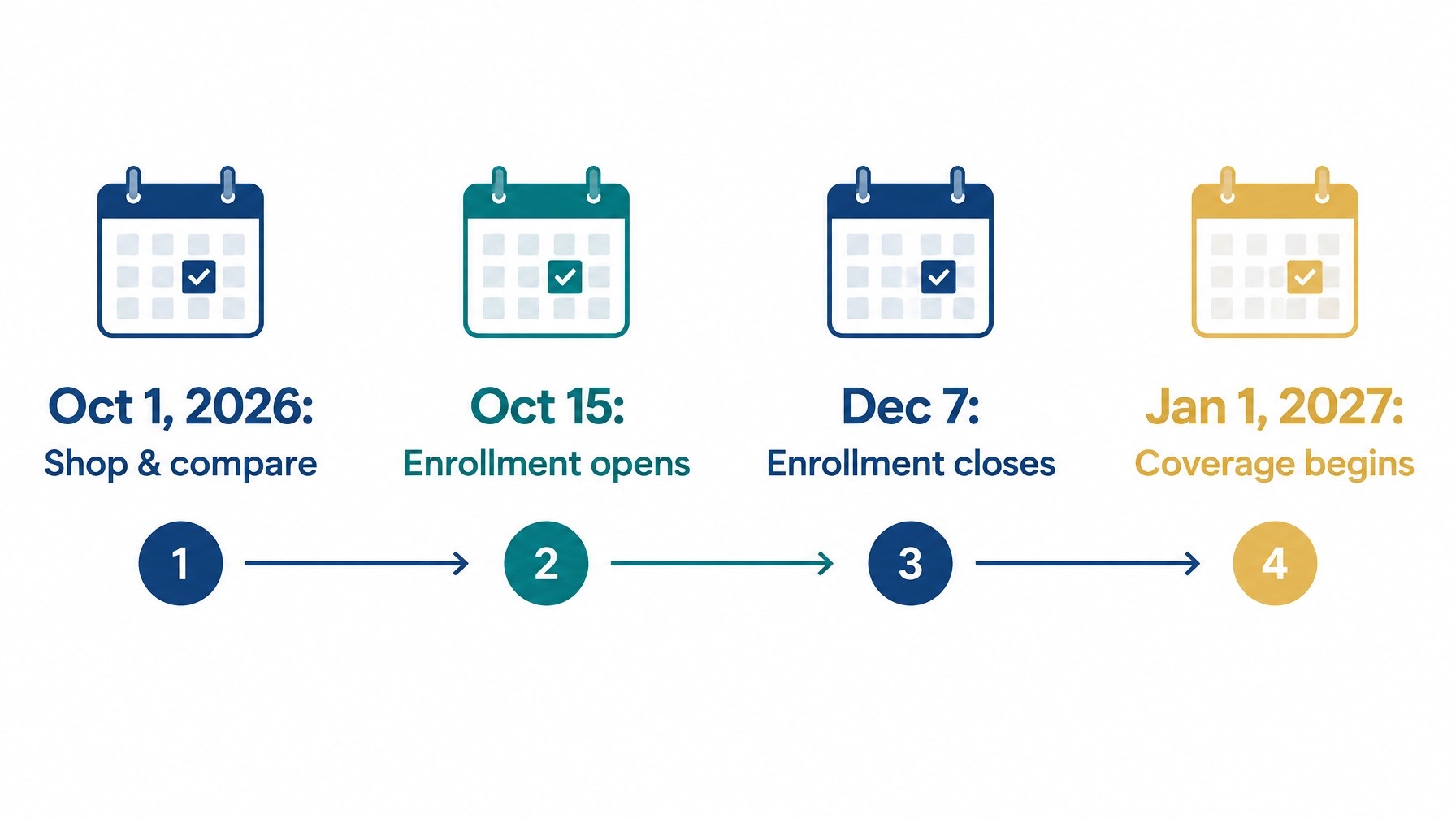
It’s Thursday, October 1, 2026-and the 2027 Medicare plan-shopping window is officially open.
You can now review and compare 2027 Medicare Advantage and Part D options on Medicare.gov, even though Medicare Open Enrollment runs from October 15 through December 7, 2026. Any changes you make during that enrollment period generally take effect January 1, 2027.
This year’s national numbers bring encouraging news for many shoppers: the projected average Medicare Advantage premium is falling, prescription coverage inside many Medicare Advantage plans is becoming less expensive, and plan availability remains broad. However, averages do not tell you whether your current plan still fits your doctors, medications, budget, and preferred hospitals.
That is why today is a smart time to begin, not wait.
What’s new today: 2027 Medicare plan shopping is open
CMS released its 2027 Medicare Advantage and Part D plan landscape on September 28, 2026. Starting today, Medicare.gov is making 2027 plan information available for shopping and comparison.
You can use Medicare.gov’s updated tools to:
- Compare Medicare Advantage and Part D plan premiums and deductibles.
- Save your doctors and other providers while comparing plans.
- Review more detailed preventive-service information.
- Open direct links to plan formularies (the lists of covered medications) and Summaries of Benefits.
- See prominent notices about changes affecting your current plan in 2027.
- Sign in securely through Login.gov, ID.me, or CLEAR.
Your Annual Notice of Change (ANOC) should have arrived by September 30. It explains changes to your current plan’s premiums, benefits, provider network, formulary, and cost-sharing for 2027. Additionally, Medicare will mail the 2027 Medicare & You Handbook to every Medicare household.
CMS is expected to post the 2027 Star Ratings on Medicare.gov around October 8, 2026. Star Ratings can help you evaluate quality, customer experience, and plan performance, but they should be reviewed alongside your personal costs and coverage needs.
As CMS Administrator Mehmet Oz said:
“CMS is fighting to keep high-quality care options affordable and accessible… We urge beneficiaries to use Open Enrollment as an opportunity to review their coverage, compare options, and pick the plan that best suits their needs and budget.”
The opportunity is open. Now the goal is to compare carefully.
The 2027 premium numbers and what they mean for your wallet
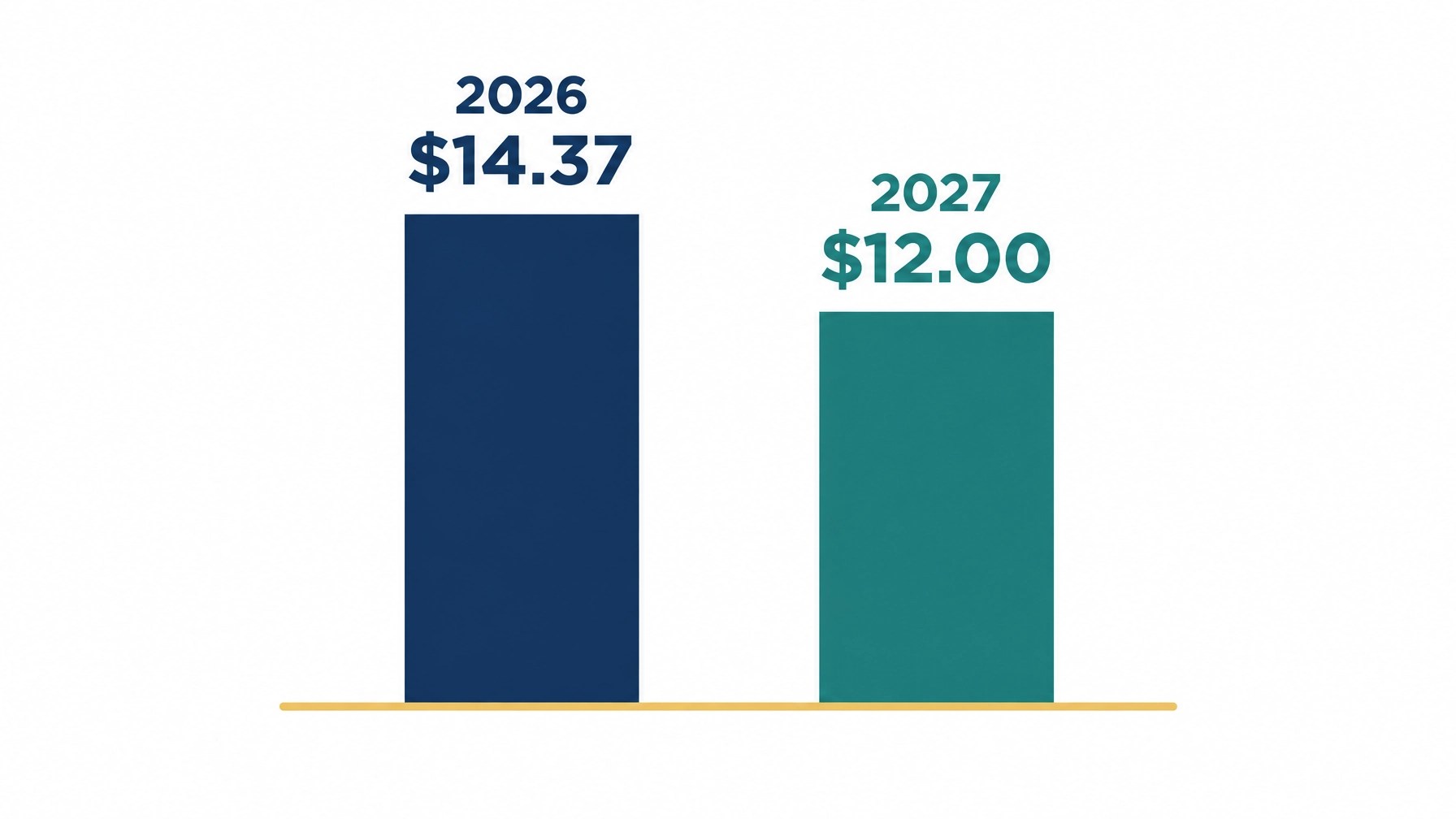
CMS projects that the weighted average monthly Medicare Advantage premium will decline from $14.37 in 2026 to $12.00 in 2027. A 16.5% decrease.
That is a reduction of approximately $2.37 per month, or about $28.44 per year, before considering other plan costs. Some plans may have a $0 premium, while others may charge more. Your actual price depends on your county, plan, carrier, benefits, and eligibility.
The average monthly Part D premium inside Medicare Advantage prescription drug plans, known as MA-PD plans, is projected to fall from $11.32 to $7.00 after Medicare Advantage rebates. A 38% decrease.
Stand-alone Part D is different. Its average monthly premium is projected to increase slightly, from $35.09 in 2026 to $36.00 in 2027. The temporary Part D Premium Stabilization Demonstration ends after 2026, which helps explain the modest increase.
The broader plan market remains relatively stable:
- More than 99% of Medicare beneficiaries will have access to at least one Medicare Advantage plan.
- 97% will have access to 10 or more plans.
- Available Medicare Advantage plans are projected to remain nearly level, declining from 5,553 in 2026 to about 5,532 in 2027.
- About 8 in 10 Medicare Advantage enrollees can remain in their current plan at the same or a lower premium.
These averages are helpful, but your total annual cost matters more than the monthly premium alone. A plan with a $0 premium can still have higher specialist copays, a larger maximum out-of-pocket limit, or a formulary that makes one of your prescriptions expensive.
Super Senior Services can simplify that comparison by helping you evaluate the complete cost picture, not just the most attractive number on the first page.
Medicare Advantage protections carrying from 2026 into 2027
Several important Medicare Advantage consumer protections introduced through 2026 rules continue into 2027.
If a Medicare Advantage plan approves an inpatient hospital admission, it generally cannot later retroactively deny or downgrade that admission based only on information gathered after the approval. Narrow exceptions may apply for fraud or an obvious error under CMS reopening standards. If a plan makes an adverse coverage decision, you generally have notice and appeal rights.
This matters because an approved inpatient stay should not unexpectedly become an observation stay after the fact simply because later information was reviewed.
CMS has also established clearer public guardrails for supplemental benefits, including Special Supplemental Benefits for the Chronically Ill, or SSBCI. Plans must publish eligibility criteria so members can better understand who qualifies. When supplemental benefits are delivered through benefit cards, 2027 requirements include real-time verification for eligible purchases, clearer covered-item rules, and no automatic rollover of unused balances into a future plan year.
In practical terms, read the details before treating a supplemental benefit as guaranteed cash. Confirm whether you qualify, where the benefit can be used, what purchases are allowed, and when the benefit expires.
Part D numbers to know for 2027
Part D has several figures worth placing on your comparison checklist:
- $2,400: The 2027 annual out-of-pocket cap for covered Part D medications.
- $700: The maximum standard Part D deductible.
- $41.33: The 2027 base beneficiary premium, which is a national calculation used in Medicare formulas, not necessarily the premium you will personally pay.
- 88%: The share of non-low-income beneficiaries expected to have access to a basic Part D plan costing $10.30 or less per month.
- 93%: The share expected to have access to an enhanced Part D plan costing less than $6 per month.
The $2,400 cap applies to covered Part D drugs. Premiums and medications excluded from your plan’s formulary generally do not count toward that limit.
Before choosing a plan, make a medication checklist that includes each prescription’s name, dosage, frequency, preferred pharmacy, and whether you use mail order. Then check the plan’s formulary and pharmacy network. A difference of even $10–$50 per prescription can materially change your annual spending.
Medicare.gov encourages beneficiaries to review their 2027 costs and coverage and compare available options during Open Enrollment:
“It’s important to review any changes to your costs and coverage and decide if you want to make any changes during Open Enrollment (October 15 – December 7).”
You can begin with Medicare Plan Compare.
Medigap is on a different clock
Medicare Supplement, or Medigap, does not follow the same annual shopping calendar as Medicare Advantage and Part D.
Your one-time Medigap Open Enrollment Period begins when you are 65 or older and enrolled in Medicare Part B. It lasts six months. During that window, you generally have the strongest protections: an insurer cannot deny you a Medigap policy or charge you more because of your health or pre-existing conditions.
That six-month period does not repeat every fall.
Consequently, if you are newly turning 65 and starting Part B, autumn is an important time to review your Medigap options. Waiting may mean medical underwriting, a higher premium, or limited choices outside certain guaranteed-issue situations.
Two common options are Plan G and Plan N:
- Plan G generally covers Part B coinsurance after you pay the Part B deductible and covers Part B excess charges. It typically does not require the routine office-visit or emergency-room copays associated with Plan N.
- Plan N may have a lower premium, but you can pay up to $20 for some office visits and up to $50 for an emergency-room visit when you are not admitted. Plan N does not cover Part B excess charges, so you may owe those amounts if a provider is legally permitted to charge them.
Medigap premiums also use different pricing methods:
- Community-rated: People in a geographic area generally pay the same base premium regardless of age.
- Issue-age-rated: Your premium is based on your age when you first buy the policy, although inflation or companywide increases may still apply.
- Attained-age-rated: Your premium is based on your current age and may rise as you get older, in addition to other increases.
Plan benefits are standardized by letter, but premiums can vary by carrier, location, rating method, household discounts, and underwriting rules. Super Senior Services can help you compare the coverage design and long-term affordability.

Your step-by-step 2027 Medicare enrollment plan
-
Confirm your Part A and Part B status.
Check whether you have Original Medicare Parts A and B, and confirm whether you are currently enrolled in Medicare Advantage or Part D. The Social Security Medicare page can help with enrollment and eligibility questions. -
Read your ANOC from cover to cover.
Look for changes to premiums, deductibles, copays, coinsurance, provider networks, formularies, and supplemental benefits. -
Build your medication checklist.
Include prescriptions, dosages, pharmacies, mail-order preferences, and estimated monthly quantities. -
Build your provider checklist.
List your primary care physician, specialists, hospitals, preferred pharmacies, and any facility you may need in 2027. Network participation can affect both access and cost. -
Compare total annual costs, not just the premium.
Review premiums, deductibles, copays, coinsurance, drug costs, and the Medicare Advantage maximum out-of-pocket limit. For 2027, applicable Medicare Advantage PPO plans may have maximum limits of $9,850 in-network and $14,800 combined in-network and out-of-network. Individual plans may set lower limits. -
Use Medicare.gov Plan Compare.
Save providers, enter medications, compare formularies, review Summaries of Benefits, and examine estimated yearly costs. You can also review the CMS Medicare resources for official program information. -
Check for financial assistance.
Medicare Savings Programs may help eligible beneficiaries pay premiums, deductibles, coinsurance, and copayments. Review the Medicare Savings Programs page. Extra Help may also reduce Part D premiums and prescription costs. -
Enroll or switch between October 15 and December 7, then save your confirmation number.
Keep your application confirmation, plan documents, effective date, and any follow-up correspondence in one secure place.
Get a personalized 2027 Medicare review
The national numbers are promising, but the right plan depends on your doctors, prescriptions, preferred hospitals, travel habits, budget, and health priorities.
Super Senior Services helps Medicare beneficiaries compare and enroll in plans across Florida, Georgia, Texas, Tennessee, North Carolina, South Carolina, Virginia, and New York State. We simplify the choices, explain premiums and cost-sharing in plain language, and help you pursue coverage that supports affordability, financial stability, and peace of mind.
Start your review at Super Senior Services Medicare Plans, or contact Stephen Jackson for personalized guidance.
Category: medicare
Compliance note: Individual NPN, Stephen Jackson: 20707378; Corporate NPN, Super Senior Services: 21536694