
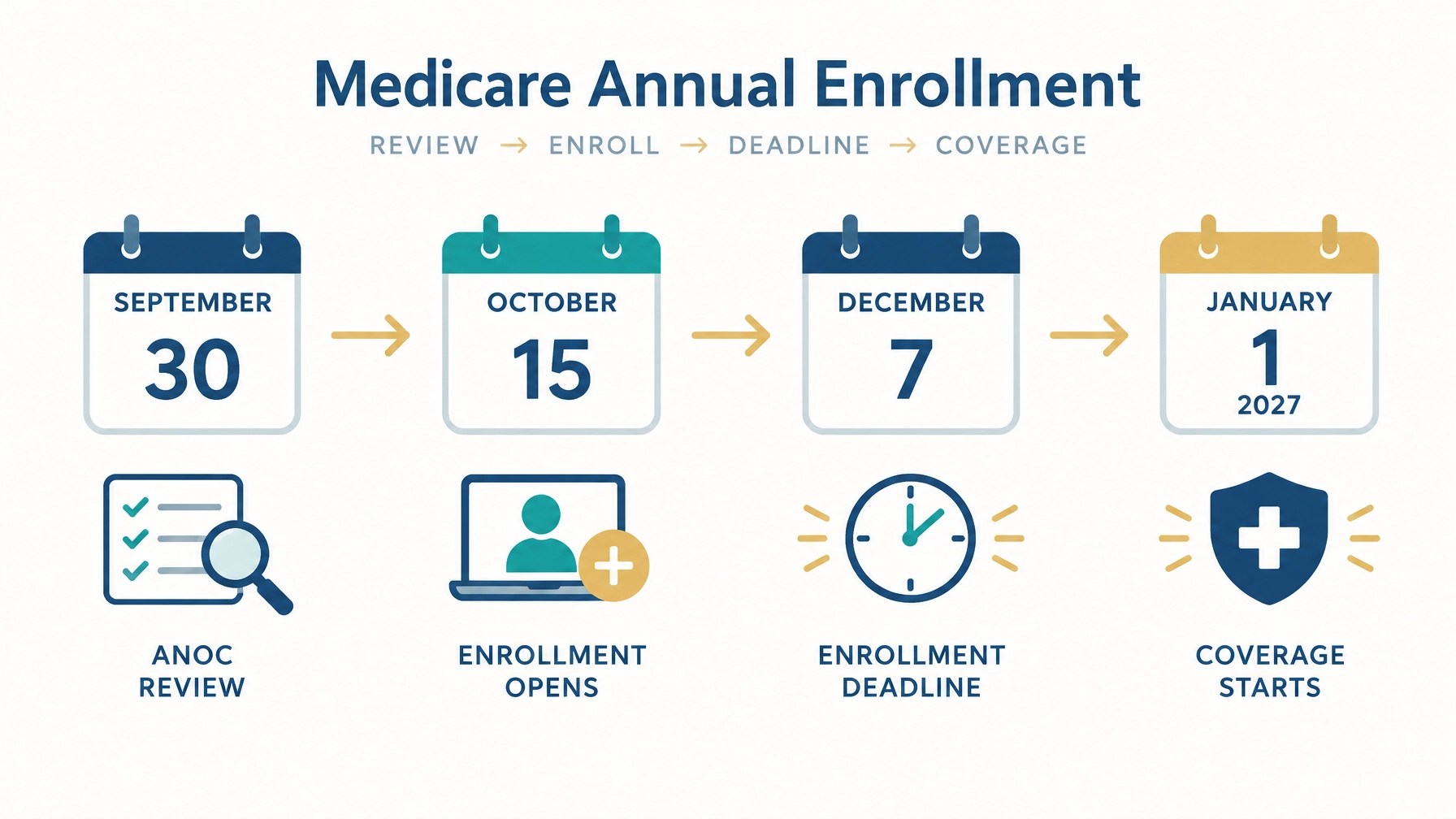
It’s Monday, September 28, 2026—the final full week before Medicare’s Annual Enrollment Period begins. Your 2027 Annual Notice of Change (ANOC) should arrive by September 30, and CMS is expected to publish the new 2027 Medicare Advantage and Part D Star Ratings in early October.
That means this is the right week to prepare, not panic.
Your goal is simple: understand what is changing, identify what matters to your health and budget, and be ready to compare plans between October 15 and December 7, 2026. Super Senior Services can help simplify that process with a personalized benefit review.
First: Complete Your Final 2027 ANOC Check
The ANOC explains changes to your current Medicare Advantage or Part D plan that begin January 1, 2027. Medicare.gov describes it as a notice covering “changes in coverage, costs, and more.”
It is important, but it is not a shopping tool. Your ANOC only describes the plan you already have. Use it as a trigger to review your options, then compare plans through Medicare.gov Plan Compare.
Read your ANOC line by line and check:
- Monthly premium: Is it increasing, decreasing, or staying the same?
- Medical deductible: What will you pay before the plan begins sharing costs?
- Copays and coinsurance: Check primary care, specialists, hospital stays, skilled nursing, emergency care, and outpatient services.
- Maximum out-of-pocket limit: This is your annual ceiling for covered Part A and Part B services under Medicare Advantage (for example, a plan could have a limit approaching $9,850 in 2027).
- Formulary: A formulary is the plan’s covered drug list. Confirm every prescription, its tier, and whether prior authorization or step therapy now applies.
- Pharmacy network: Verify your pharmacy remains in-network and whether it is still classified as preferred (which can mean lower prescription costs).
- Provider network: Confirm your primary doctor, specialists, hospitals, and preferred facilities.
- Prior authorization: Look for new approval requirements for tests, procedures, medications, or therapies.
- Supplemental benefits: Review dental, vision, hearing, over-the-counter allowances, transportation, flex cards, and Part B giveback benefits.
A plan with a $0 premium may still cost more overall if its hospital copays, drug tiers, or maximum out-of-pocket limit are higher. Consequently, your ANOC review should focus on your total annual cost, not one attractive number.
If your ANOC has not arrived by September 30, contact your plan. If you see a major change, connect with Super Senior Services for a personalized review.
What the 2027 Star Ratings Overhaul Means for You
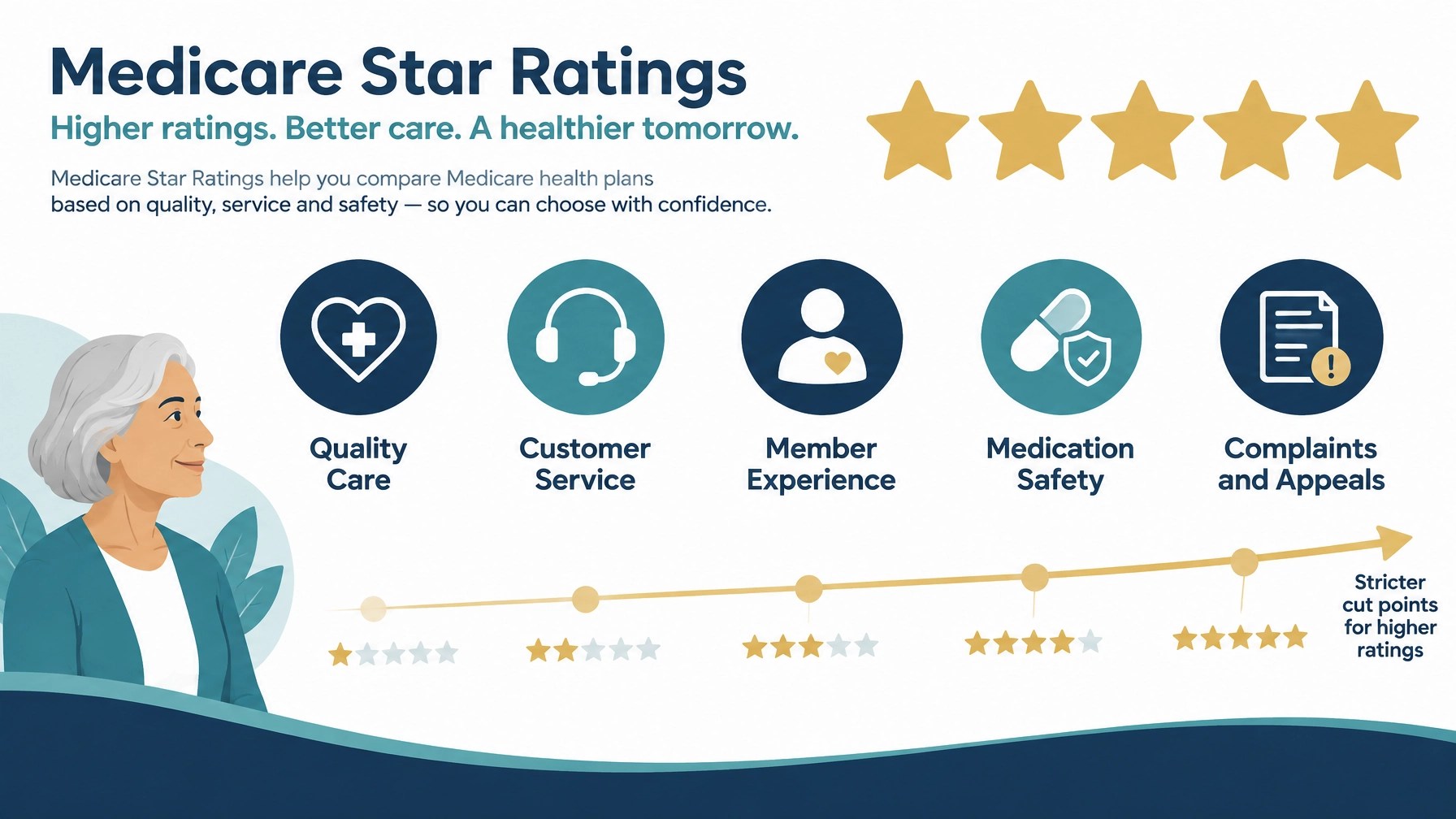
CMS Star Ratings help you compare Medicare Advantage and Part D plan performance. They consider areas such as:
- Quality of care and health outcomes
- Preventive care and chronic-condition management
- Customer service
- Member experience
- Complaints and appeals
- Prescription drug safety and pricing accuracy
CMS finalized a structural overhaul that removes 11 administrative or low-variation measures from the Star Ratings methodology. Three measures (pain assessment, medication reconciliation after discharge, and medication therapy management completion) are removed starting with the 2027 Star Ratings, and the remaining changes are phased into later rating years.
Draft 2027 cut points also indicate that roughly half of the quality thresholds became harder to reach. In everyday language, a plan may need stronger performance to earn the same star level.
That does not automatically mean your plan’s doctors or care quality suddenly changed. A plan’s rating can shift because CMS changes the measures, weights, or thresholds used to calculate the score. Therefore, do not judge a plan on stars alone.
Review the rating alongside your providers, medications, copays, formulary, pharmacy access, and maximum out-of-pocket exposure. Plans with a 5-star rating also offer an annual Special Enrollment Period, giving eligible beneficiaries an additional opportunity to move into an available 5-star plan.
Medicare Advantage Protections and Costs Carrying Into 2027
Several important Medicare Advantage changes from 2026 continue to affect your 2027 review.
First, if a Medicare Advantage plan approves an inpatient hospital admission, the plan generally cannot later retroactively deny or downgrade that approved admission based only on information gathered afterward. Narrow exceptions include fraud or obvious error, and affected coverage decisions carry appeal rights. Keep copies of authorization notices and hospital paperwork.
Second, supplemental benefits, especially Special Supplemental Benefits for the Chronically Ill (SSBCI), now have clearer guardrails. Plans must make eligibility criteria public. If a plan uses a benefit card, the card must use real-time verification to confirm that an item or service is covered. Benefit balances also do not automatically roll over into the next plan year.
For 2027, the maximum Medicare Advantage out-of-pocket ceilings are:
- $9,850 for in-network Part A and Part B services
- $14,800 for combined in-network and out-of-network services on applicable PPO plans
These limits generally do not include Part D prescription spending or many supplemental benefits. Your actual plan limit may be lower, so check the ANOC and Evidence of Coverage.
The practical lesson is straightforward: a low premium does not necessarily mean a low-cost plan. Compare premiums, routine copays, prescription costs, provider access, and worst-case medical exposure together.
Part D in 2027: Know the Numbers Before You Compare
CMS has finalized several important Part D figures for 2027:
- $2,400 annual out-of-pocket cap for covered Part D prescriptions
- $700 maximum standard deductible
- $41.33 base beneficiary premium
The $41.33 figure is a national base used in Medicare calculations. It is not necessarily the premium you will pay for your specific plan. Actual premiums vary by plan, location, and income-related adjustments.
The Part D Premium Stabilization Demonstration ends after 2026. As a result, stand-alone prescription drug plan premiums may respond differently to plan bids and market conditions in 2027. Review your plan’s premium, formulary, pharmacy network, utilization rules, and drug tiers rather than assuming your current plan will remain the best value.
Many beneficiaries can also use the Medicare Prescription Payment Plan to spread covered Part D costs across the year instead of paying the full amount at the pharmacy. This does not reduce what you owe, but it can make a large prescription bill easier to manage month by month.
Medigap Has a Different Enrollment Clock
Medicare Supplement Insurance, also called Medigap, follows a different timeline from Medicare Advantage and Part D.
Your one-time six-month Medigap Open Enrollment Period begins when you are 65 or older and enrolled in Medicare Part B. During this period, you generally have the strongest protections: insurers cannot deny you a policy or charge more because of health conditions.
That clock does not repeat every year.
Plan G vs. Plan N
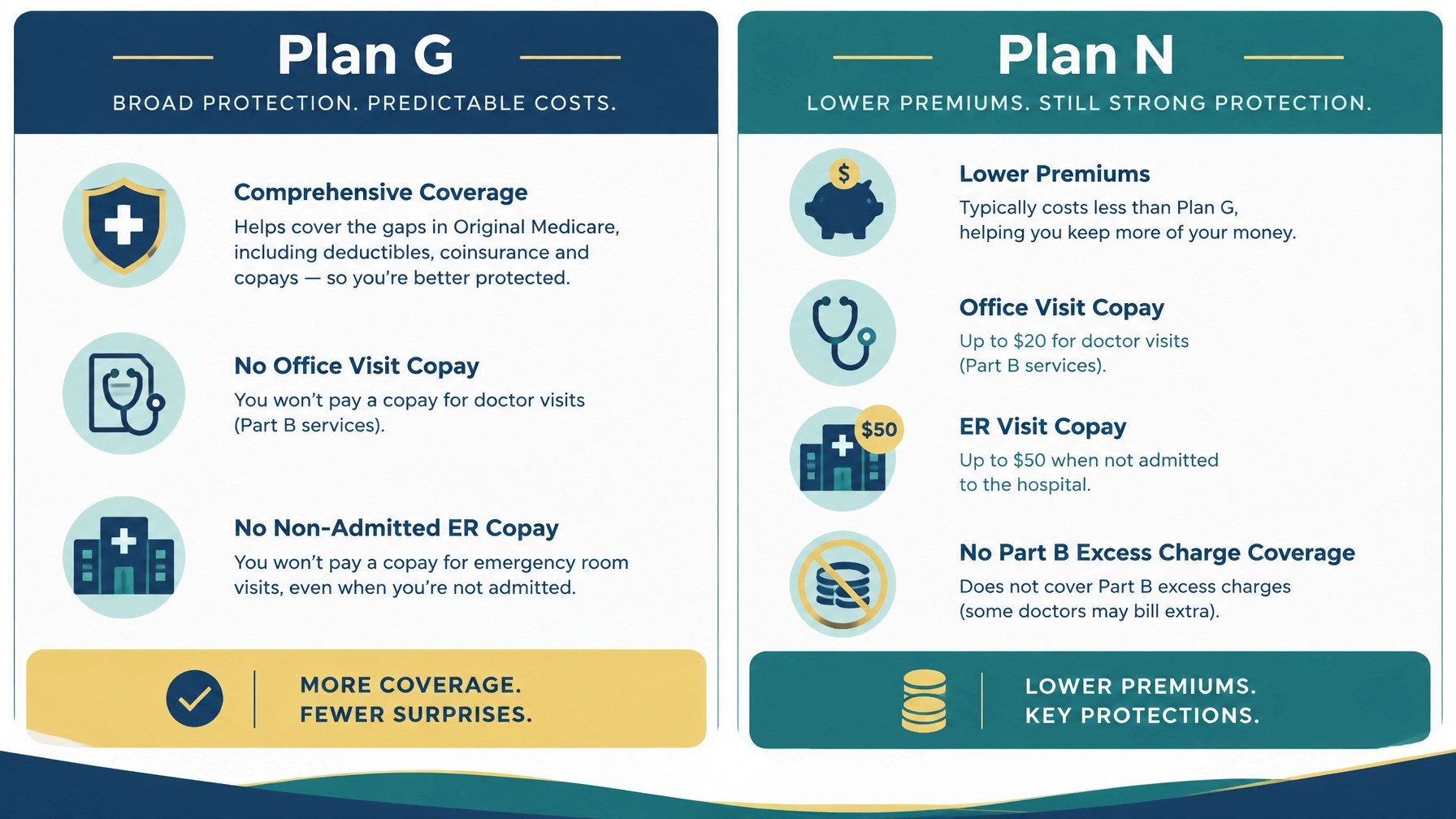
Both plans help cover many costs left by Original Medicare, but the trade-offs differ:
- Plan G: Generally covers Part B coinsurance after the Part B deductible and covers Part B excess charges.
- Plan N: May charge up to $20 for some office visits and up to $50 for emergency room visits when you are not admitted. Plan N does not cover Part B excess charges.
An excess charge is an amount a provider may legally bill above the Medicare-approved amount. Plan N may have a lower premium, but you accept more cost-sharing responsibility.
Medigap premiums use three common pricing methods:
- Community-rated: Generally the same premium regardless of age.
- Issue-age-rated: Based on your age when you buy the policy.
- Attained-age-rated: Increases as you get older.
New York State is part of Super Senior Services’ Medicare service area, along with Florida, Georgia, Texas, Tennessee, North Carolina, South Carolina, and Virginia. Because state rules and pricing can vary, compare both benefits and future premium structure.
Your Step-by-Step 2027 Medicare Enrollment Plan
Use this checklist to move from uncertainty to action:
- Confirm your Medicare Part A and Part B status. If you are new to Medicare, review your enrollment information through Medicare.gov and Social Security.
- Read your ANOC by September 30. Mark every change in premiums, deductibles, cost-sharing, drugs, networks, prior authorization, and supplemental benefits.
- Build two checklists. Write down your medications, including dosage and quantity, and list your doctors, hospitals, pharmacies, and preferred specialists.
- Compare total annual cost. Add premiums, estimated prescriptions, office visits, hospital costs, and your possible maximum out-of-pocket exposure.
- Use Medicare.gov Plan Compare. Check formulary details, pharmacy networks, provider access, Star Ratings, and plan benefits.
- Enroll or make changes from October 15 through December 7, 2026. If the plan receives your request by December 7, coverage generally begins January 1, 2027.
- Save your confirmation number. Print or screenshot your enrollment confirmation, submission date, plan name, and effective date.
Get a Personalized Medicare Review Before October 15
Medicare decisions are personal. The right plan depends on your doctors, prescriptions, preferred pharmacies, travel habits, health needs, and budget, not just a star rating or a $0 premium.
Super Senior Services provides comprehensive benefit reviews and simplified comparisons of trusted carriers in your area. We help you evaluate affordable options tailored to your lifestyle, then review your coverage annually as your needs evolve.
We serve Medicare beneficiaries in FL, GA, TX, TN, NC, SC, VA, and NYS.
Start your review at Super Senior Services Medicare Plans, or contact Stephen Jackson directly. A clear comparison today can support better affordability, financial stability, and peace of mind throughout 2027.
WordPress category: medicare
Compliance note: Individual NPN, Stephen Jackson: 20707378. Corporate NPN, Super Senior Services: 21536694.