If you’re a small business owner, you’ve probably asked the same question a thousand times: “How do I offer benefits without blowing up my budget?” You’re not alone.
Group health insurance can feel like a maze: premiums, deductibles, networks, participation rules, tax credits, renewals… it’s a lot. The good news is you don’t need to become an insurance expert to make smart, confident choices. You just need a clear starting point and a partner who can simplify the process.
This beginner’s guide breaks down small business group health insurance basics in New York and Florida, with practical tips you can actually use.
“The best benefits strategy is the one your team will actually use: and your business can actually sustain.”
What This Guide Covers (So You Can Stop Googling)
By the end, you’ll understand:
- What “small group” coverage is and how eligibility typically works
- The key cost terms (premiums, deductibles, copays, coinsurance, out-of-pocket max)
- NY vs. FL basics (including NY’s SHOP marketplace details)
- The Small Business Health Care Tax Credit (and what it takes to qualify)
- Smart plan design choices (medical + dental + vision)
- A simple setup checklist and common mistakes to avoid
If you want help comparing options with real numbers, reach out here: https://superseniorservices.com/contact
Group Health Insurance 101: The Plain-English Definition
Small business group health insurance is a policy you (the employer) offer to eligible employees, typically with the business paying a portion of the premium (monthly cost). In exchange, your team gets access to ACA-compliant coverage with negotiated network rates and built-in consumer protections.
Common eligibility basics (in real life)
Exact rules vary by carrier and state, but many group plans generally expect:
- A legitimate business entity (LLC, S-Corp, etc.)
- W-2 employees (most group plans don’t allow 1099 contractors to enroll as “employees”)
- Enough eligible employees enrolling to meet participation requirements (more on that below)
The 5 Terms That Control Your Budget (and Your Employees’ Experience)
Understanding these terms keeps you from buying a plan that looks affordable: until someone actually uses it.
1) Premium
The amount paid every month to keep the plan active (e.g., $550/employee/month). Employers often contribute a set dollar amount (e.g., $300/month) or a percentage (e.g., 50%).
2) Deductible
What your employee pays before the plan starts paying for most services (e.g., $2,000). Some services (like preventive care) can be covered before the deductible.
3) Copay
A flat fee for a service (e.g., $35 PCP visit).
4) Coinsurance
A percentage split after the deductible (e.g., employee pays 20%, plan pays 80%).
5) Out-of-pocket maximum
The most your employee pays in a plan year for covered services (e.g., up to $9,450). After that, the plan pays 100% for covered in-network care.
“A slightly higher premium can sometimes protect your team from thousands in surprise cost-sharing later.”

NY vs. FL: What’s the Same: and What’s Different
Some rules are federal (so they apply in both states), but some details depend on where your business is located.
What’s the same in both NY and FL (federal ACA basics)
- If you have fewer than 50 full-time equivalent employees (FTEs), you’re generally not required to offer health insurance under the ACA employer mandate.
- If you have 50+ FTEs, you may be an Applicable Large Employer (ALE) and need to offer coverage that meets affordability/minimum value standards or potentially face penalties.
A helpful federal starting point is HealthCare.gov’s SHOP/employer section:
https://www.healthcare.gov/small-businesses/employers/
New York (NY): SHOP runs through NY State of Health
New York uses its own Small Business Marketplace through NY State of Health. This matters because:
- The NY SHOP marketplace is the only place where eligible employers can access the Small Business Health Care Tax Credit.
- NY State of Health lays out employer eligibility and tax credit requirements clearly, including wage thresholds and contribution expectations.
NY State of Health Employer portal:
https://nystateofhealth.ny.gov/employer
NY also notes eligibility like:
- A physical business location in NYS
- Generally 1–100 FTE employees for SHOP eligibility
- Intent to offer coverage to all full-time employees (typically 30+ hours/week)
Florida (FL): SHOP goes through HealthCare.gov
Florida small employers typically access SHOP through HealthCare.gov (federal platform). The same tax credit concept applies, but your enrollment flow is different than NY’s.
The Small Business Health Care Tax Credit (How It Works in NY + FL)
This is one of the biggest “hidden” savings opportunities: if you qualify.
In general, the Small Business Health Care Tax Credit may be worth up to 50% of the employer premium contribution (and up to 35% for eligible tax-exempt employers). To qualify, you typically must:
- Have fewer than 25 FTEs
- Pay average wages under a set annual limit (adjusted over time)
- Contribute at least 50% of employee-only premiums
- Purchase coverage through SHOP
NY State of Health highlights an example wage threshold: average wages under $67,000 for the 2025 tax year (per FTE) as a condition for tax credit eligibility, along with the 50% contribution and offering coverage to full-time employees. See the NYS employer page here:
https://nystateofhealth.ny.gov/employer
For IRS context, NY State of Health links directly to the IRS overview of the tax credit and SHOP:
https://www.irs.gov/affordable-care-act/employers/small-business-health-care-tax-credit-and-the-shop-marketplace
Practical takeaway: if you think you might qualify, it’s worth structuring your plan (and contribution strategy) to avoid accidentally disqualifying yourself.
Want help checking eligibility and running scenarios? Contact Stephen here:
https://superseniorservices.com/contact
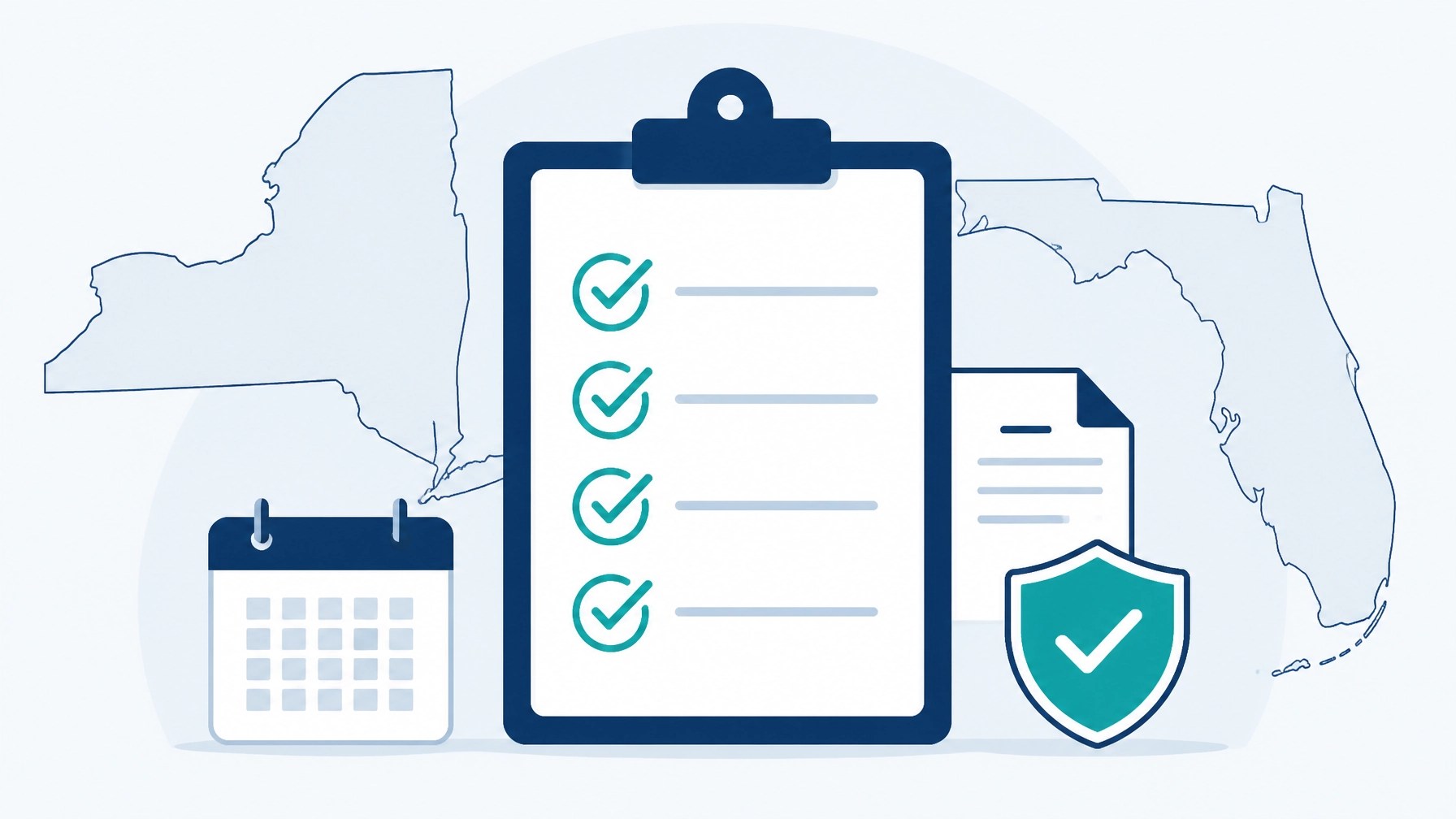
Participation + Employer Contribution: The Two “Gatekeepers” of Group Plans
Even when the law doesn’t force a specific contribution amount, many carriers and SHOP pathways impose minimum standards.
Minimum participation (why it exists)
Many carriers require that a certain percentage of eligible employees enroll (often around 70%, though it can vary). Employees who have other creditable coverage (like a spouse’s plan, Medicare, or VA coverage) may be able to waive without “hurting” participation: carrier rules differ.
Why it matters: if participation comes in too low, the carrier may decline coverage outside certain enrollment windows.
Employer contribution (common expectations)
A frequent baseline is contributing at least 50% of the employee-only premium: especially when aiming for SHOP enrollment or tax credit eligibility.
Why it matters: your contribution strategy affects:
- Your recruiting and retention
- Employee take-home pay
- Whether your plan is “sticky” (people actually enroll)
- Potential tax advantages
Medical + Dental + Vision: How to Build a Benefits Package People Appreciate
Health insurance is the core, but many small businesses win loyalty with a simple add-on strategy.
Medical
Start with a plan that balances:
- Monthly premium (e.g., $450–$750/employee/month depending on age, area, and plan level)
- Deductible level (e.g., $1,500 vs. $4,000)
- Network strength (are the doctors your team uses actually in-network?)
Dental
Dental can be relatively affordable and high-impact. It also helps employees actually use preventive care (cleanings, exams), which supports fewer expensive issues down the road.
Super Senior Services also helps with dental and vision coverage options here:
https://superseniorservices.com/dental-and-vision
Vision
Vision benefits are often low-cost and easy for employees to understand (routine exams, allowances for glasses/contacts). It’s a simple “quality of life” perk.

Cost-Control Strategies That Still Feel Generous
You don’t need a Silicon Valley budget to offer solid benefits. You need a smart design.
1) Set a defined contribution
Instead of promising “we’ll pay 70% forever,” consider a set employer contribution (e.g., $300–$500 per employee per month). That gives you cost predictability.
2) Offer a couple of plan options (not 12)
Too many choices creates decision paralysis. A clean lineup (e.g., one lower-premium/high-deductible and one richer plan) helps employees pick based on their situation.
3) Match plan richness to your workforce
If your team is younger and mostly uses urgent care + preventive care, a plan with a moderate deductible and strong network may beat a high-premium “gold” plan no one enrolls in.
4) Re-shop annually
Rates change. Networks change. Formularies change (a formulary is the plan’s covered drug list). Annual reviews are one of the easiest ways to protect your budget without reducing benefits.
That ongoing review is one of our core promises at Super Senior Services: we don’t disappear after enrollment: we help you keep the plan working.
Beginner-Friendly Setup Checklist (NY + FL)
Here’s a simple sequence that keeps you out of trouble:
-
Count your employees and estimate FTEs
(HealthCare.gov has tools and guidance for small employers: https://www.healthcare.gov/small-businesses/employers/) -
Decide who you want to cover
Full-time only (commonly 30+ hours/week), or include additional classes if allowed. -
Choose your employer contribution strategy
Percentage vs. defined dollar amount. -
Confirm participation rules up front
This avoids wasted time quoting plans you can’t place. -
Compare plans by total value: not just premium
Include deductible, copays, coinsurance, out-of-pocket max, and network. -
Enroll and communicate clearly
A one-page “what you pay + how to use it” summary can dramatically improve satisfaction.
If you want help building a clean plan lineup and communicating it to employees, contact us:
https://superseniorservices.com/contact
Common Mistakes to Avoid
- Buying on price alone and ignoring networks (employees hate “surprise out-of-network” situations)
- Forgetting prescriptions (formularies matter: one medication can change everything)
- Assuming 1099 contractors can enroll like employees
- Skipping the tax credit conversation when you might qualify through SHOP
- Not reviewing annually, then getting stuck with an avoidable renewal increase
How Super Senior Services Helps (Without the Headache)
At Super Senior Services, we guide you through benefits like a partner: not a call center.
Here’s what that looks like:
- Personalized plan recommendations based on your budget, workforce, and goals
- Side-by-side comparisons of trusted carriers available in your area
- Help understanding cost-sharing (premiums, deductibles, copays, coinsurance) in plain English
- Annual reviews so your plan keeps pace with your business
- Support that’s transparent, straightforward, and built around peace of mind
Explore more about our business services here:
https://superseniorservices.com/business
Ready to talk through your options in NY or FL? Start here:
https://superseniorservices.com/contact
{“@type”:”Article”,”about”:[“Small business group health insurance”,”Employee benefits”,”SHOP marketplace”,”Small Business Health Care Tax Credit”],”author”:{“url”:”https://superseniorservices.com/”,”name”:”Super Senior Services”,”@type”:”Organization”},”@context”:”https://schema.org”,”headline”:”Small Business Group Health Insurance 101: A Beginner’s Guide to Mastering Employee Benefits in NY and FL”,”mentions”:[{“url”:”https://www.healthcare.gov/small-businesses/employers/”,”name”:”HealthCare.gov – SHOP for small employers”,”@type”:”WebPage”},{“url”:”https://nystateofhealth.ny.gov/employer”,”name”:”NY State of Health – Employers (SHOP)”,”@type”:”WebPage”},{“url”:”https://www.irs.gov/affordable-care-act/employers/small-business-health-care-tax-credit-and-the-shop-marketplace”,”name”:”IRS – Small Business Health Care Tax Credit and SHOP”,”@type”:”WebPage”}],”publisher”:{“url”:”https://superseniorservices.com/”,”name”:”Super Senior Services”,”@type”:”Organization”},”mainEntityOfPage”:{“@id”:”https://superseniorservices.com/category/businesshealth”,”@type”:”WebPage”}}