
If you were enrolled in New York’s Essential Plan under the 200–250% federal poverty level (FPL) income bracket, your coverage situation changed on July 1, 2026.
That income bracket ended, and affected Essential Plan coverage generally ended on June 30. Now, you may need to choose a Qualified Health Plan (QHP) through NY State of Health: and August 30, 2026 is the critical deadline to request coverage retroactive to July 1.
The clock is moving. But you still have options.
This checklist will help you understand the change, compare your choices, and complete enrollment with greater confidence.
First, understand the New York Essential Plan coverage cliff
New York’s Essential Plan has offered very affordable coverage, including $0 monthly premiums for eligible enrollees, no deductible on many plans, and low copays. However, beginning July 1, 2026, the income limit was reduced from 250% FPL to 200% FPL.
That means New Yorkers whose household income falls between approximately 200% and 250% FPL may no longer qualify for the Essential Plan.
Approximate annual income ranges cited in New York guidance include:
- One-person household: $31,920–$39,900
- Two-person household: $43,280–$54,100
- Three-person household: $54,640–$68,300
- Four-person household: $66,000–$82,500
Your exact eligibility depends on your household size, projected income, and NY State of Health determination. If your income has changed since your last application, do not assume that your previous eligibility still applies.
The New York Attorney General summarized the situation this way:
“Losing health insurance can be stressful and confusing, and New Yorkers deserve clear, reliable information as they make decisions about their care.”
The practical takeaway is simple: your Essential Plan did not automatically convert to a QHP. You must review your notice, update your information, compare plans, and enroll.

Why August 30, 2026 matters
The loss of Essential Plan coverage is a qualifying event. Consequently, affected New Yorkers receive a Special Enrollment Period (SEP) through NY State of Health outside the regular open enrollment period.
This SEP gives you an opportunity to select a QHP after the Essential Plan income change. If you act by August 30, you can request that your new coverage be retroactive to July 1, 2026.
That matters if you received medical care, filled prescriptions, visited a specialist, or have pending bills from July or August. Retroactive coverage may allow eligible claims from that period to be processed under your new plan. You may still be responsible for premiums for the retroactive months, and you should confirm the effective date and claims process directly with NY State of Health and your selected insurer.
Do not wait until the last day if you can avoid it. Your application may require income verification, household documentation, plan selection, and a first premium payment. A completed application is not the same as completed enrollment.
Start at NY State of Health or call 1-855-355-5777 to confirm the deadline and effective-date rules associated with your account.
Your August 30 coverage checklist
Use the steps below to move from uncertainty to action.
1. Review every notice you received
Look for letters, emails, or messages from NY State of Health explaining:
- The end date of your Essential Plan coverage
- The reason your eligibility changed
- Your Special Enrollment Period
- Available QHP options
- The deadline to enroll
- Instructions for requesting a July 1 effective date
- Documents you may need to submit
Save copies of your notices. Take screenshots of your online account, write down confirmation numbers, and keep a record of every call. These details can help if you need to clarify a coverage date or resolve a claim.
You can also review the New York Attorney General’s health insurance shopping guidance, which explains plan types, costs, provider networks, and scam warnings.
2. Update your household income and family information
NY State of Health uses your projected household income and household size to determine eligibility for financial assistance.
Update information such as:
- Current wages or self-employment income
- Expected annual household income
- Household members
- Address and contact information
- Access to employer-sponsored coverage
- Changes in tax filing or dependent status
If your income has dropped to 200% FPL or below, you may need to be evaluated again for the Essential Plan or another public coverage option. If your income remains above that limit, you may qualify for a QHP with a premium tax credit, which reduces your monthly premium.
Use your best reasonable estimate. If your income changes again, update your NY State of Health application promptly. That can help reduce the risk of receiving too much or too little financial assistance.
3. Compare the full cost: not just the monthly premium
A QHP may have a higher monthly premium than the Essential Plan. However, the lowest premium is not always the lowest total-cost option.
Review:
- Monthly premium
- Annual deductible
- Primary care and specialist copays
- Coinsurance
- Emergency room and hospital costs
- Prescription drug costs
- Out-of-pocket maximum
- Any separate prescription deductible
- Estimated yearly cost based on your expected care
A deductible is the amount you pay for covered services before the plan begins paying its share. For example, with a $2,000 deductible, you may pay the first $2,000 of certain covered care before coinsurance begins. A copay is a fixed amount, such as $30 for a doctor visit. Coinsurance is a percentage of the allowed cost, such as 20%.
Your out-of-pocket maximum is the most you generally pay in a plan year for covered, in-network services through deductibles, copays, and coinsurance. Once you reach that limit, the plan generally pays 100% of covered in-network benefits for the rest of the plan year.
For clear definitions, review the HealthCare.gov deductible glossary, copayment glossary, coinsurance glossary, and out-of-pocket maximum glossary.
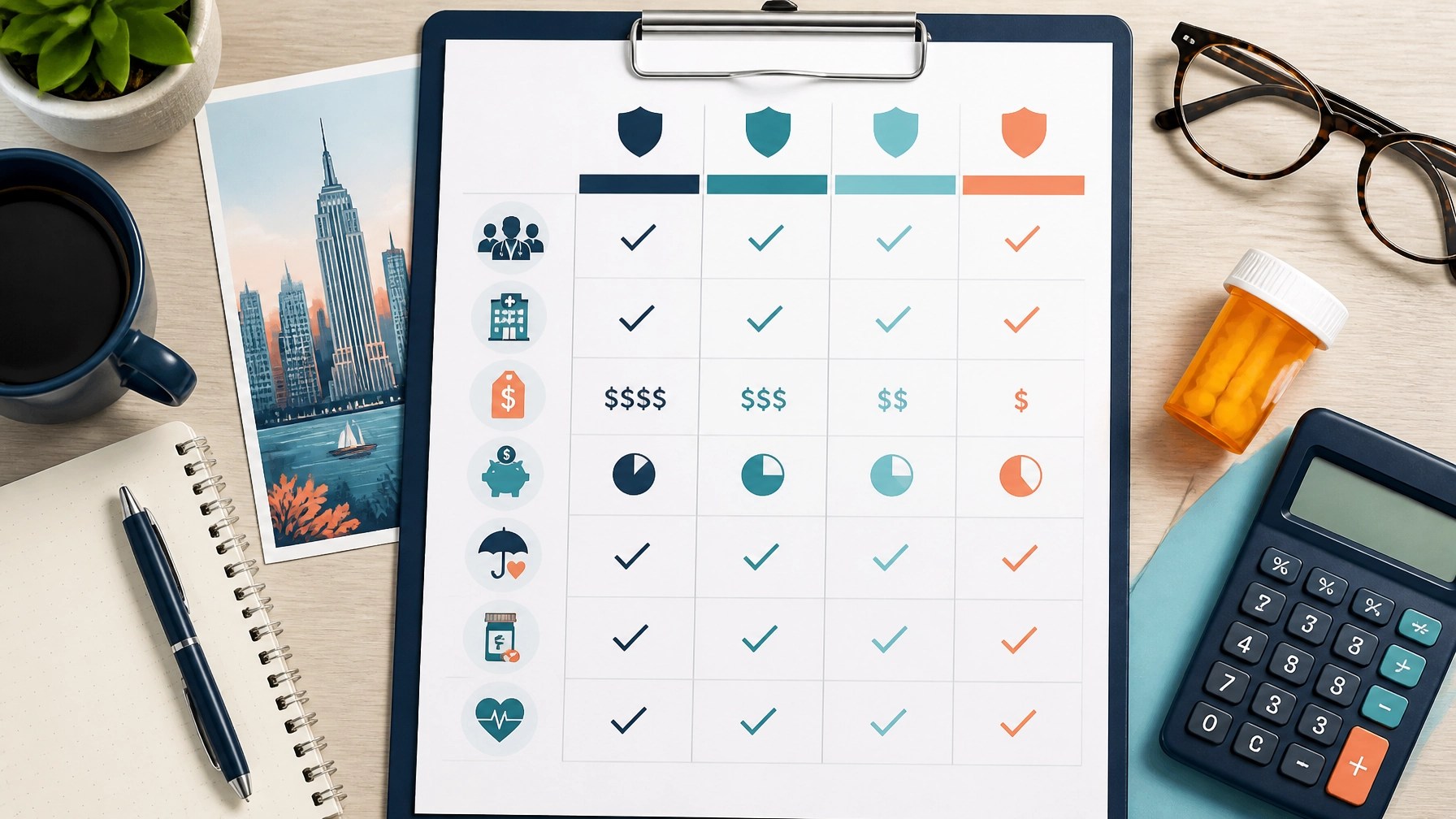
4. Check your doctors, hospitals, and prescriptions
Before choosing a plan, confirm that your preferred providers participate in the plan’s network.
Check:
- Primary care provider
- Specialists
- Preferred hospital
- Urgent care locations
- Behavioral health providers
- Pharmacies
- Ongoing treatments and procedures
Also review the plan’s formulary, which is the list of covered prescription drugs. Formularies commonly organize medications into tiers, and each tier may have a different copay or coinsurance amount (for example, $10–$50 per prescription or a percentage of the negotiated cost).
A plan that saves $100 per month but does not cover your established specialist or medication may cost more in the long run. Network and formulary checks protect both your care routine and your budget.
5. Look closely at Silver plans if you qualify for extra savings
A Silver plan generally falls in the middle of the Marketplace metal categories, with moderate premiums and cost-sharing. More importantly, if you qualify for cost-sharing reductions (CSRs), you receive those additional savings only by enrolling in a Silver plan.
CSRs can lower:
- Deductibles
- Copays
- Coinsurance
- Out-of-pocket maximums
For example, a Silver plan with cost-sharing reductions may have a much lower deductible or a $15 primary care copay instead of a substantially higher charge. The plan may also cover a larger share of your expected medical costs.
Read the HealthCare.gov Silver health plan glossary and cost-sharing reduction guidance before selecting a metal level.
Do not choose Bronze, Silver, Gold, or Platinum based on the label alone. Match the plan to how often you use care, what prescriptions you take, and how much financial risk you can comfortably handle.
6. Complete the enrollment: not just the application
Once you choose a plan:
- Select the plan through NY State of Health
- Request the appropriate effective date, including July 1 if applicable
- Submit any requested verification documents
- Review the enrollment confirmation
- Save your confirmation number
- Follow up with the insurer
- Pay the first premium as instructed
Your coverage may not become active until the first premium is paid. If you are requesting retroactive coverage, ask how premiums for July and August will be billed and how providers should submit claims for services during that period.
If you already paid medical bills after July 1, keep itemized statements, receipts, explanation-of-benefits documents, and prescription records. Once your QHP is active, contact the insurer about eligible claims and reimbursement procedures.
You do not have to compare QHPs alone
Choosing a QHP after losing Essential Plan eligibility can feel overwhelming, especially when premiums and cost-sharing are higher than what you previously paid.
Super Senior Services provides personalized guidance exclusively to New York residents seeking individual health insurance. We help you compare QHP options around:
- Your doctors and hospitals
- Your prescription medications
- Your monthly budget
- Your expected healthcare use
- Your deductible and copay preferences
- Your potential total annual cost
Our goal is to simplify the process, explain the tradeoffs clearly, and help you move forward with financial stability and peace of mind.
Contact Super Senior Services to discuss your New York coverage options, or explore plan guidance.
Compliance note: Individual NPN : Stephen Jackson: 20707378. Corporate NPN : Super Senior Services: 21536694.
Category: individualhealth