Offering health insurance as a small business owner can feel like you’re trying to hit a moving target: premiums rise, networks change, and employees ask (rightfully) “What does this actually cover?”
The good news: you have more control than you think. Once you understand the handful of “levers” that drive cost, you can build a plan that’s competitive for hiring and sustainable for your budget.
As Stephen Jackson (Owner of Super Senior Services) likes to say, “The best plan isn’t the one with the fanciest brochure: it’s the one that matches your team’s real life.”
In this guide, we’ll break down practical ways to get affordable employee coverage in Florida (FL), Texas (TX), and New York (NY): including where the SHOP Marketplace helps (and where it doesn’t), what to ask carriers, and how to avoid common renewal surprises.
“You don’t have to know every insurance term: you just need a process that makes the trade-offs clear.”
First: Know what you can control (and what you can’t)
Most small-group plan pricing is based on factors you can’t fully “negotiate away” (state rules, rating methodology, age mix, geography, and carrier pricing). Consequently, the smartest savings usually come from design choices and funding strategy: not chasing a mythical secret plan.
Here are the big three levers you can control:
- Premiums (what you and your employees pay each month)
- Deductible (what an employee pays before most services start paying out)
- Coinsurance/copays (the split after the deductible: e.g., 20% coinsurance, or a copay like $35 per visit)
Additionally, prescription drug coverage is often its own world:
- Formulary = the drug list the plan covers
- Rx tiers = how drugs are priced (e.g., Tier 1 generics vs Tier 3 brand)
Your goal: keep premiums affordable without making the plan unusable because the deductible is too high or the network is too narrow.
CTA: Want a quick “benefit review” style comparison? Contact Stephen here: https://superseniorservices.com/about (scroll to contact) or use the contact option listed on the site.
Your shopping lanes: FL vs TX vs NY (why state rules matter)
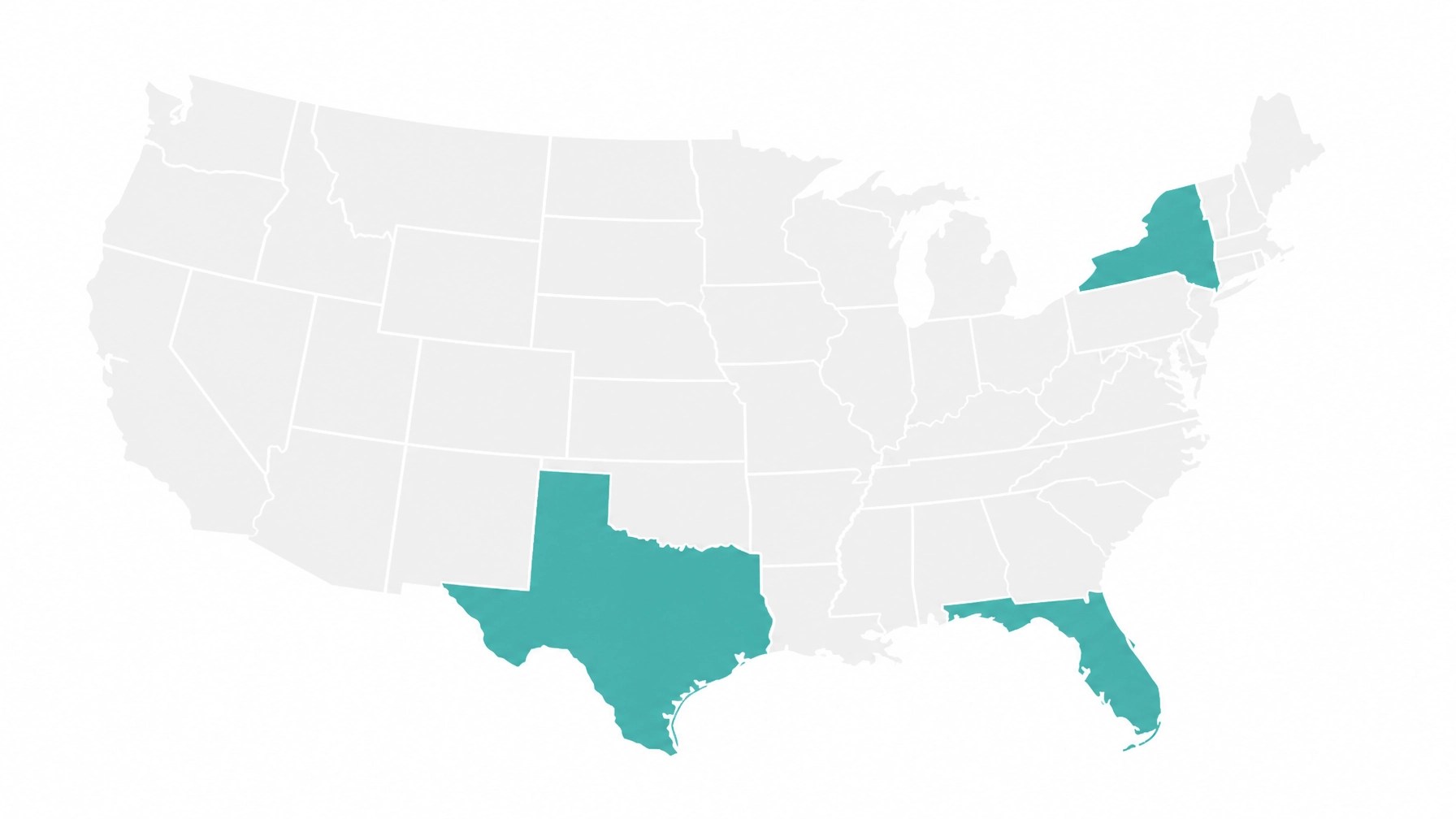
Even though “group health insurance” is a national topic, the shopping experience is very state-specific: especially when it comes to the SHOP Marketplace and small business tax credits.
Florida (FL): SHOP Marketplace can be relevant
Florida uses the federal marketplace infrastructure for small employers:
- HealthCare.gov SHOP overview: https://www.healthcare.gov/small-businesses/choose-and-enroll/shop-marketplace-overview/
- General small-business health coverage info: https://www.healthcare.gov/small-businesses/employers/
If you’re a very small, lower-wage employer, the Small Business Health Care Tax Credit can be a real savings tool (more on that below).
Texas (TX): SHOP is typically not available, so strategies shift
In Texas, many employers discover there are no SHOP plans available via HealthCare.gov in practice, which means the SHOP-only tax credit is usually not available for new claimants. A good explainer:
- HealthInsurance.org FAQ on SHOP availability: https://www.healthinsurance.org/faqs/ive-heard-a-lot-about-health-insurance-exchanges-but-what-are-shop-exchanges/
That doesn’t mean you can’t offer solid coverage: it just means you’ll typically shop directly with carriers and use plan design + contribution strategy to manage costs.
New York (NY): NY State of Health is a major lane
New York has its own official marketplace:
- NY State of Health (Small Business): https://nystateofhealth.ny.gov/employer
New York also has some unique small-group rules and options. For background:
- HealthInsurance.org NY marketplace guide: https://www.healthinsurance.org/aca-marketplace/new-york/
Important note about Super Senior Services licensing: Super Senior Services helps with Medicare and Senior services in FL, GA, TX, TN, NC, SC, VA, and NY. However, Business Health (small group) and Individual Health insurance services are NY-only.
So in this post, we’ll still educate you about FL and TX options (since you asked for it), but if you want hands-on enrollment help from our team for small business group coverage, we can directly assist New York businesses.
CTA (NY businesses): Reach Stephen via https://superseniorservices.com/about and we’ll help you compare options and build a budget-friendly approach.
The #1 overlooked savings tool: the Small Business Health Care Tax Credit (when you can use it)
The federal Small Business Health Care Tax Credit can be worth up to:
- 50% of the employer’s premium contribution (for-profit)
- 35% (tax-exempt organizations)
Key catch: it’s tied to buying coverage through SHOP.
- CMS SHOP info: https://www.cms.gov/marketplace/employers-sponsors/small-business-health-options-program-shop
- HealthCare.gov small business resource hub: https://www.healthcare.gov/small-businesses/employers/
Typical eligibility basics (simplified):
- Fewer than 25 full-time equivalent employees (FTEs)
- Average wages under an annual IRS threshold (inflation-adjusted)
- Employer generally pays at least 50% of the employee-only premium
- Coverage purchased through SHOP (where SHOP exists)
What that means by state:
- FL: Often a real option to explore through HealthCare.gov SHOP
- TX: Usually not available due to lack of SHOP plans (so don’t build your budget around it)
- NY: Explore through NY State of Health’s Small Business Marketplace
Practical tip: Ask your broker/agent (or your CPA) to run a quick “tax credit screen.” If you qualify, it can be one of the cleanest ways to reduce net cost without cutting benefits.
CTA: If you’re a NY employer, we’ll help you model the numbers and compare plans: https://superseniorservices.com/about
Affordable plan design: what “good” looks like for real employees

“Affordable” can’t just mean cheap premium. If employees avoid care because the deductible is too high, you’ll feel it in turnover, morale, and missed work.
Here’s a practical way to balance value and cost.
1) Start with the services your employees actually use
When we do a benefit review, we usually start with:
- Primary care and urgent care usage (e.g., 1–3 visits/year)
- Ongoing prescriptions (e.g., $10–$50 per prescription depending on tier)
- Specialist visits (e.g., $60 copay vs 20% coinsurance)
- Expected life events (new baby, planned surgery, chronic care)
Then we pick a plan that protects employees from “financial cliff” moments:
- A reasonable out-of-pocket maximum (the cap that limits worst-case spending)
- Clear copays for common services when possible
2) Consider an HDHP + HSA when it fits your team
A high-deductible health plan (HDHP) paired with a health savings account (HSA) can reduce premium: and the HSA adds tax advantages.
For concrete numbers, one NY chamber resource lists 2026 HSA parameters like:
- Minimum deductible (single): $1,700
- HSA contribution limit (single): $4,400
- HSA contribution limit (family): $8,750
- Catch-up (55+): +$1,000
Source: https://amherst.org/health-sg-2026/
How it saves money in practice:
- Lower premium can free up dollars to seed HSAs (e.g., $300–$1,000 per employee)
- Employees get a tax-advantaged way to handle upfront costs
3) Don’t ignore the formulary and pharmacy network
Two plans can look similar…until someone fills a prescription.
Ask:
- Are key medications covered on the formulary?
- Are common drugs Tier 1 or Tier 2?
- Is there a mail-order option (sometimes lower cost)?
- Any prior authorization requirements that slow care?
Your contribution strategy matters more than most owners realize
You can lower your total spend without “taking benefits away” by adjusting who you subsidize and how.
Common approaches:
- Pay a higher percentage for employee-only coverage (helps recruiting/retention)
- Contribute less for dependents (employee+spouse/child/family), since dependent costs can be the budget-breaker
- Offer two plan options (a lower-premium HDHP + a richer copay plan) so employees can pick based on their situation
This is where personalized guidance pays off: once you run the numbers, you can build a contribution model that hits a monthly budget target (e.g., “keep employer cost around $450 per enrolled employee”) while still offering real protection.
CTA (NY businesses): Want help structuring tiers and contributions so your renewal doesn’t surprise you? https://superseniorservices.com/about
If you’re in TX: what to do when SHOP isn’t there
In Texas, since SHOP plans are typically unavailable, your playbook becomes:
- Compare ACA-compliant small-group plans directly through carriers and brokers
- Focus on plan design, network fit, Rx coverage, and employer contribution
- If you’re evaluating alternatives, discuss tax-advantaged arrangements with your benefits and tax professionals
Useful references:
- Texas health insurance overview (state portal): https://www.texas.gov/health-services/texas-health-insurance/
- BCBSTX small group ACA plan page (example carrier resource): https://bcbstx.com/employer/small-group-aca-plans
- HealthCare.gov small business hub (general rules): https://www.healthcare.gov/small-businesses/employers/
Even without the SHOP tax credit, many small TX employers keep coverage affordable by:
- Offering one strong “base” plan
- Pairing it with employer HSA contributions (e.g., $50–$150/month)
- Doing an annual market check to avoid drifting into overpriced renewals
If you’re in FL: how to think about SHOP + affordability
Florida employers should at least check SHOP eligibility because the tax credit can materially change your net premium.
Start here:
- SHOP overview: https://www.healthcare.gov/small-businesses/choose-and-enroll/shop-marketplace-overview/
Then build affordability with:
- A plan with predictable copays for common care (so employees feel the value)
- An “employee-only” contribution strategy that keeps participation strong
- A renewal calendar (don’t wait until the last minute)
If you’re in NY: your best affordability workflow (simple, repeatable)
New York has robust tools through NY State of Health for small employers:
- NY State of Health employer entry point: https://nystateofhealth.ny.gov/employer
A simple NY workflow we recommend:
- Run a baseline comparison
- Current plan vs two alternatives (e.g., similar metal level + one HDHP option)
- Stress-test the plan
- “What happens if someone gets hospitalized?”
- “What’s the out-of-pocket max?”
- “How does coinsurance work after deductible (e.g., 20%)?”
- Check networks
- Are the local hospitals and primary care doctors in-network?
- Check Rx
- Top 5–10 prescriptions your team uses (if they’ll share)
- Finalize contributions
- Decide your monthly budget and set tiers accordingly
This is exactly where Super Senior Services shines: we simplify the comparison, explain the trade-offs in plain English, and help you choose something you can stick with: because stability is a benefit, too.
CTA (NY businesses): Contact Stephen to get a side-by-side plan comparison: https://superseniorservices.com/about
Renewals: the easiest way to save money is to start earlier

If you only do one thing differently this year, do this: start your renewal review 60–90 days early.
That gives you time to:
- Compare carriers (not just accept the renewal)
- Adjust deductibles/copays strategically
- Re-shop networks and pharmacy benefits
- Communicate changes so employees aren’t blindsided
A good annual rhythm:
- 60–90 days out: review claims patterns (high-level), network needs, Rx issues
- 45–60 days out: collect quotes / compare plan designs
- 30 days out: employee communication + enrollment steps
How Super Senior Services can help (and where we’re authorized)
We’re Super Senior Services, and we’re big on transparency and doing what’s right for your situation: not what’s easiest to sell.
- Medicare & Senior services: FL, GA, TX, TN, NC, SC, VA, and NY
- Small business group health insurance (Business Health): NY only
- Individual health insurance: NY only
So if you’re a NY business owner, we can directly help you shop, compare, and enroll your employee coverage: and then stay with you year after year for reviews.
Ready for a personalized comparison? Contact Stephen Jackson here: https://superseniorservices.com/about
Compliance note
Stephen Jackson (Individual NPN): 20707378
Super Senior Services (Corporate NPN): 21536694
{“@type”:”Article”,”about”:[“Small business health insurance”,”Employee benefits”,”SHOP Marketplace”,”Affordable health coverage”],”author”:{“name”:”Penny (Super Senior Services)”,”@type”:”Person”},”@context”:”https://schema.org”,”headline”:”The Small Business Owner’s Guide to Affordable Employee Coverage in FL, TX, and NY”,”publisher”:{“url”:”https://superseniorservices.com/”,”name”:”Super Senior Services”,”@type”:”Organization”},”mainEntityOfPage”:”https://superseniorservices.com/”,”isAccessibleForFree”:true}